
Last updated October 16, 2026
 AC repair
 Furnace & heating
 Heat pumps
 Ductless mini splits
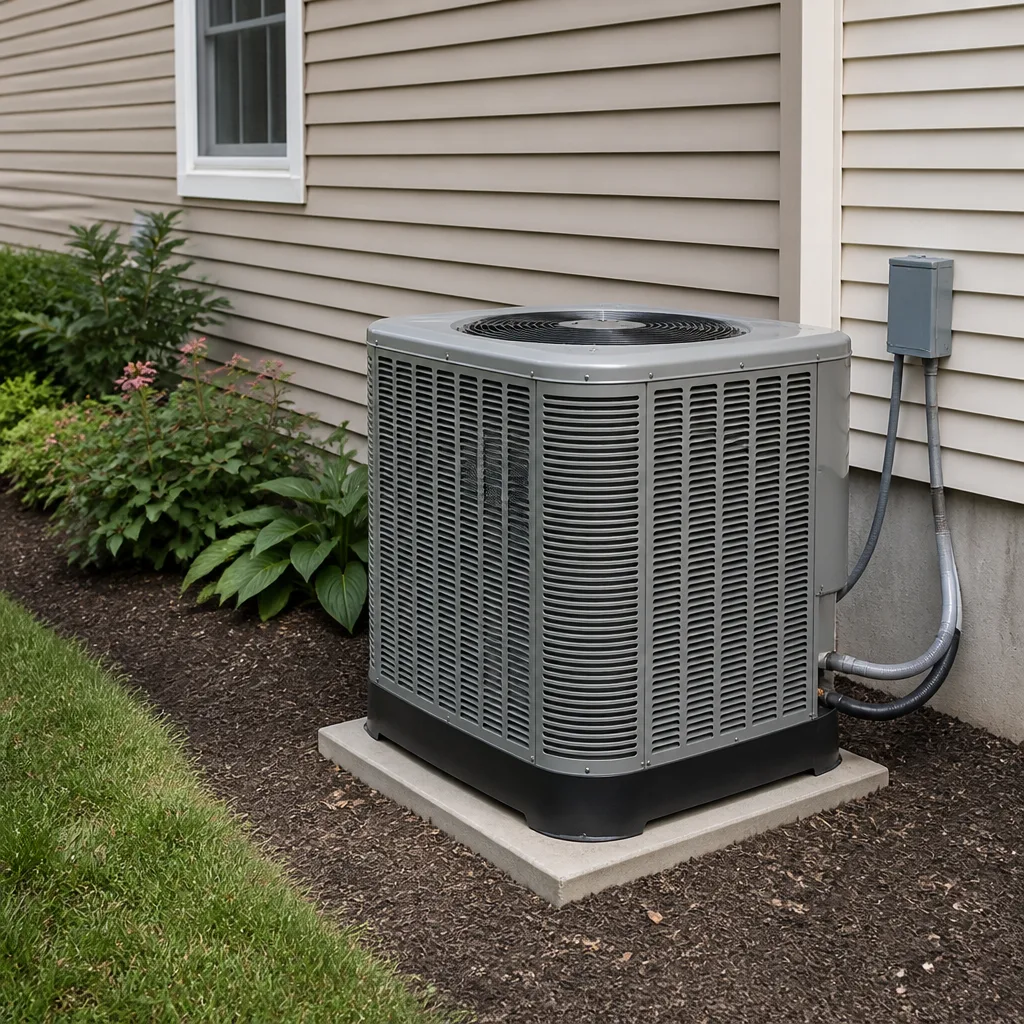 Carrier
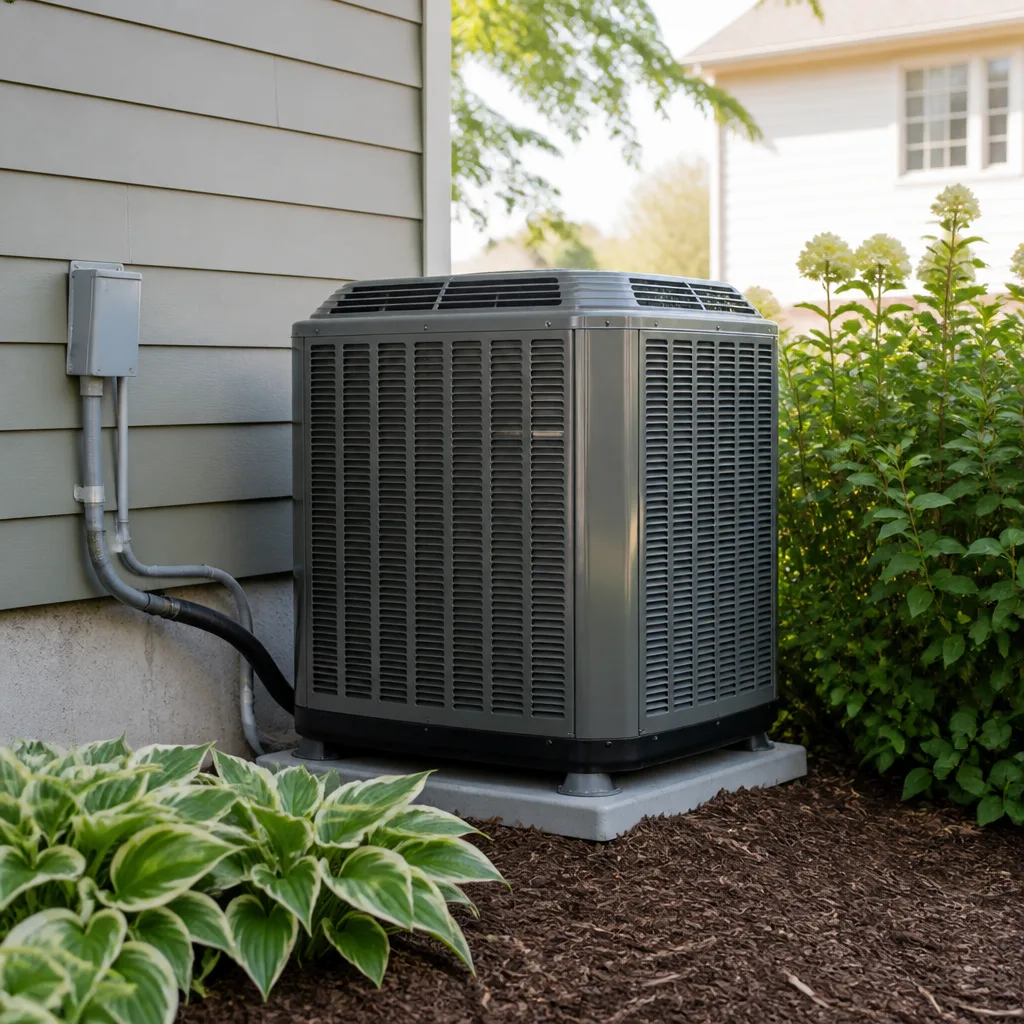 Trane
Trane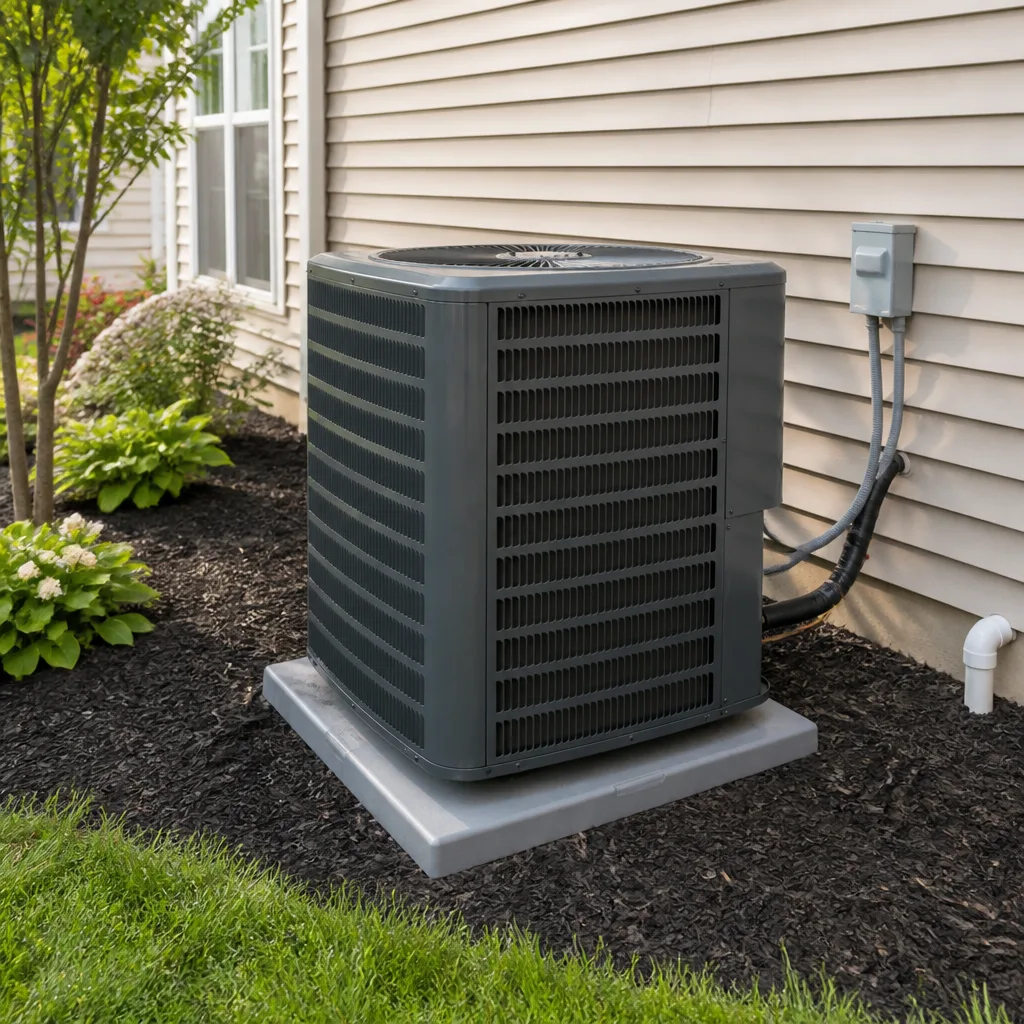 Goodman
Seasonal tune-up and full diagnostic on your Carrier, Trane, or Goodman system - readings shown to you before any repair is proposed
Diagnosis first, numbers second - you approve the repair price before a single part goes in.
Get your free estimateAC Repair Maintenance Checklist for Hempstead Homeowners
Changing your air filter once a season is on every maintenance list on the internet. It’s also not enough to prevent the two most common AC failures in Hempstead: frozen evaporator coils from restricted airflow and corroded condenser fins from salt-laden coastal air. This guide is built from what we actually find when we open units in Hempstead, Uniondale, and West Hempstead during the summer rush. Each checklist item below includes a pass/fail standard, not just a task description, so you know exactly what a technician should be doing and what the readings should look like.
Styles & brands we work with
Quick Answer
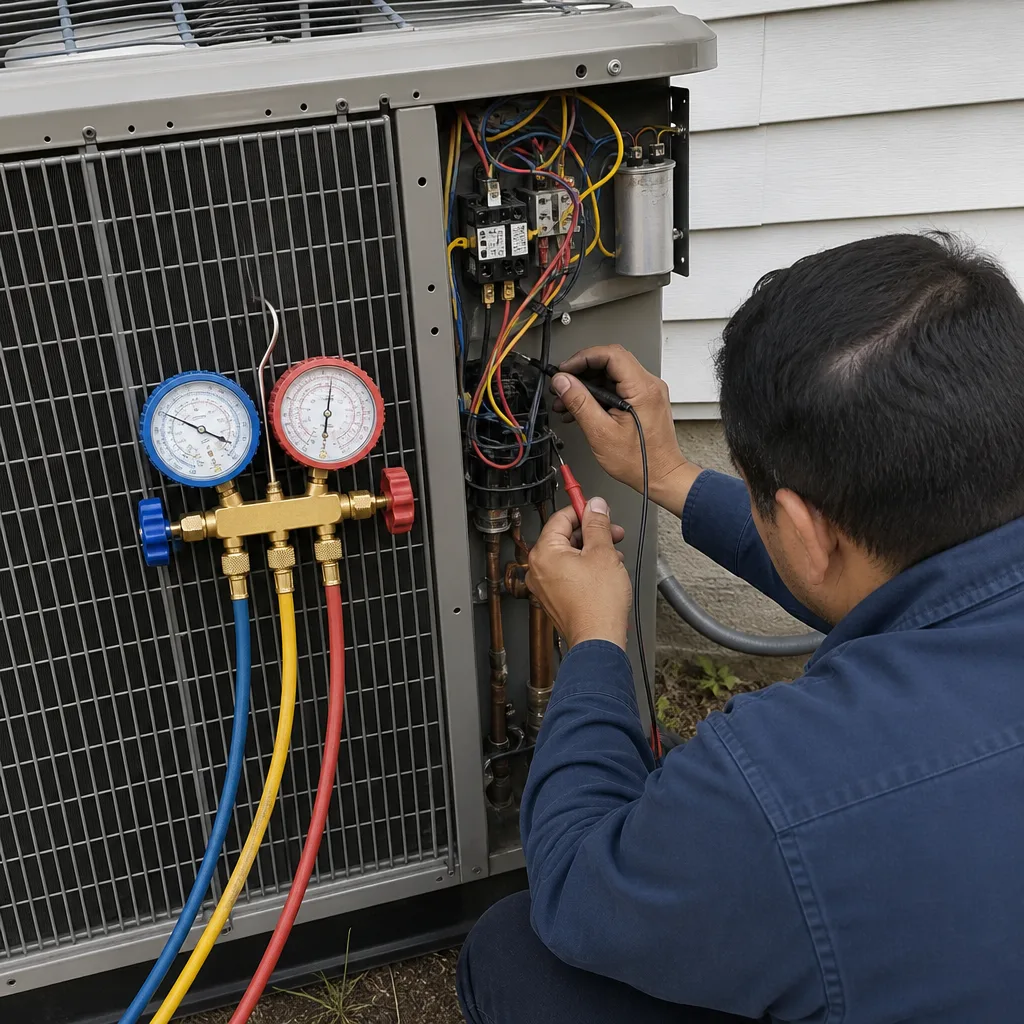
The core Hempstead AC maintenance checklist covers five items most generic lists skip: a salt-corrosion inspection of the condenser coil with a fin-integrity standard, a drain line flush with a measurable flow-rate test, refrigerant pressure readings within manufacturer-specified ranges, a torque check on all electrical connections, and a capacitance test on the run capacitor. A complete Hempstead maintenance visit takes 60 to 90 minutes and should produce written readings for every test. If your technician can’t show you the numbers, you didn’t get a real maintenance visit.
Table of Contents
- Condenser Coil Inspection: The Salt-Corrosion Standard for Hempstead
- Evaporator Drain Line Flush: A Measurable Flow-Rate Pass/Fail
- Refrigerant Pressure Readings: What to Ask For and What’s Acceptable
- Electrical Connection Torque Check: Why Long Island Summers Loosen Terminals
- Airflow and Filter Standard: Static Pressure, Not Just a New Filter
- Run Capacitor Test: The $15 Part That Kills Compressors
- Seasonal Timing: When to Schedule Service in Hempstead Before the June Rush
- Common Mistakes to Avoid
- When to Call a Professional
- Frequently Asked Questions
- The Bottom Line
Condenser Coil Inspection: The Salt-Corrosion Standard for Hempstead
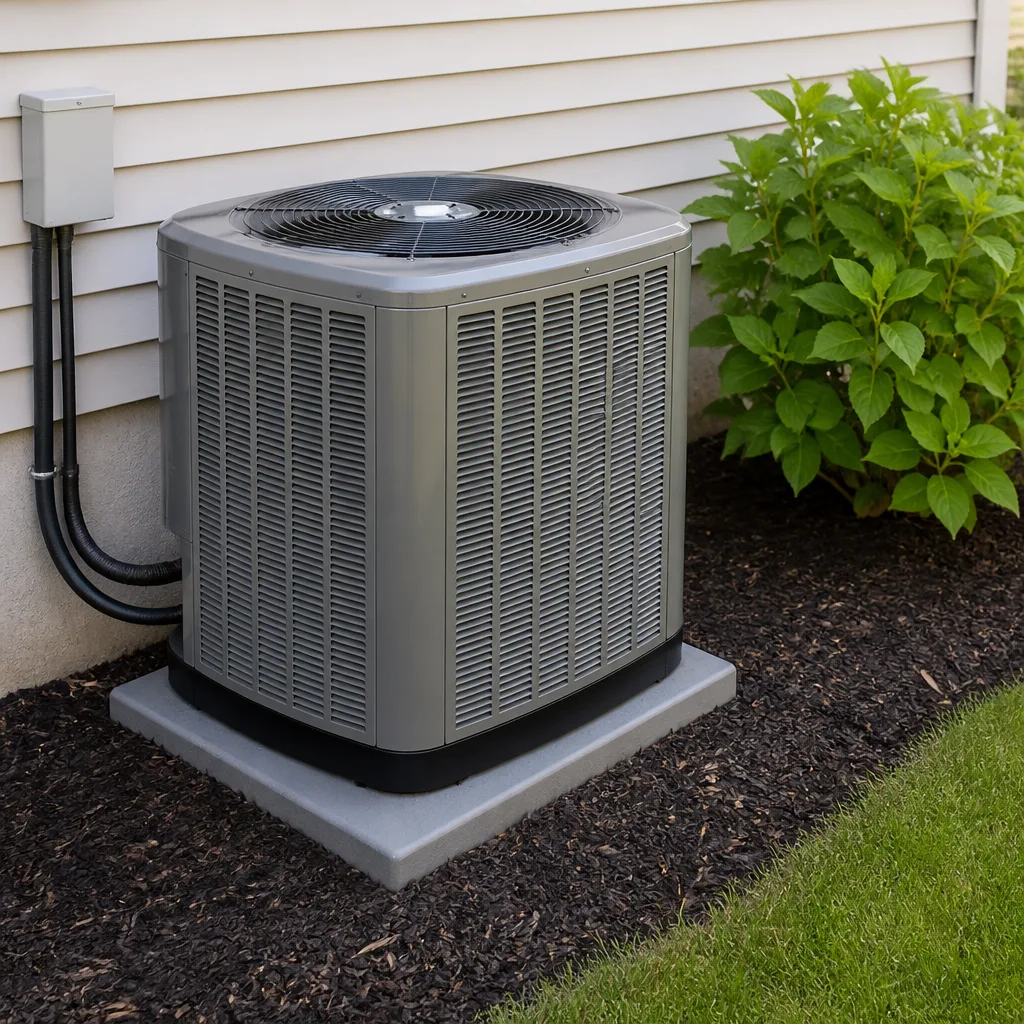
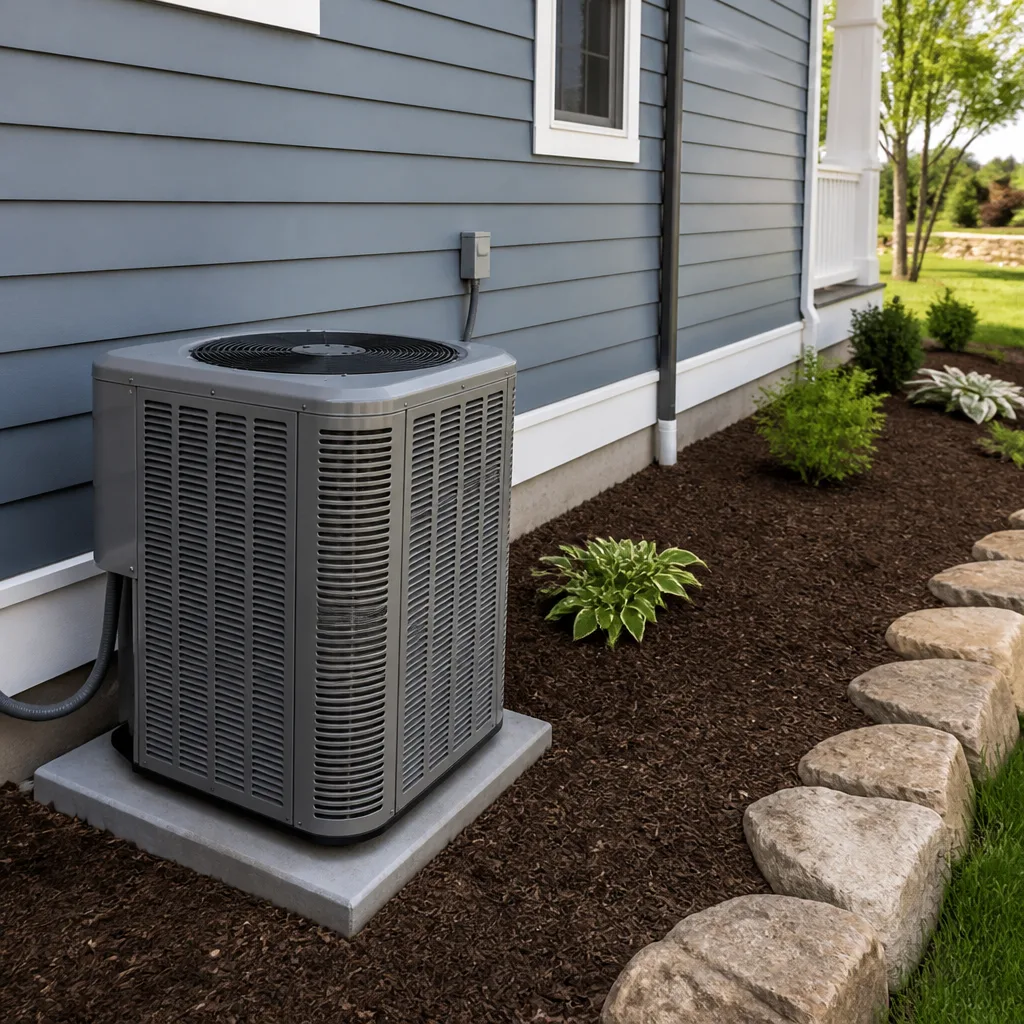
In Hempstead, the outdoor condenser unit sits in air that carries salt from the South Shore and Long Island Sound, depending on wind patterns. That salt settles on the aluminum fins of the condenser coil and, combined with humidity, starts eating into the metal. Most maintenance checklists say “inspect the coil.” That’s not a standard. Here’s what a pass/fail inspection actually looks like on a Hempstead condenser.
A coil that passes has fins that are uniformly spaced, with no white or gray crust forming at the base where the fins meet the coil tubes. Shine a flashlight through the coil; you should see light through the gaps. A coil that fails shows white powdery deposits on the fin edges, fins that bend flat when brushed lightly, or a coil that looks like it’s been dusted with chalk. In our experience in Hempstead, units within two miles of the water can start showing early salt corrosion within three to four years of installation. Units further north in Hempstead, near the Southern State Parkway, often take longer but still show it.
The fix depends on the stage. Early-stage salt film gets washed off with a coil cleaner designed for coastal exposure, not a pressure washer. Pressure washing folds the fins and makes airflow worse. Mid-stage corrosion, where the fins are brittle but still intact, calls for a chemical wash with a fin conditioner. Late-stage corrosion, where fins crumble to the touch, means the coil is no longer transferring heat efficiently. At that point, replacement is the honest recommendation, not another cleaning.
Pass/fail standard: At least 90% of fin surface should be intact, upright, and light-permeable after cleaning. Fewer than that and the coil needs replacement or the unit will run hotter, longer, and cost more to operate every summer.
Evaporator Drain Line Flush: A Measurable Flow-Rate Pass/Fail
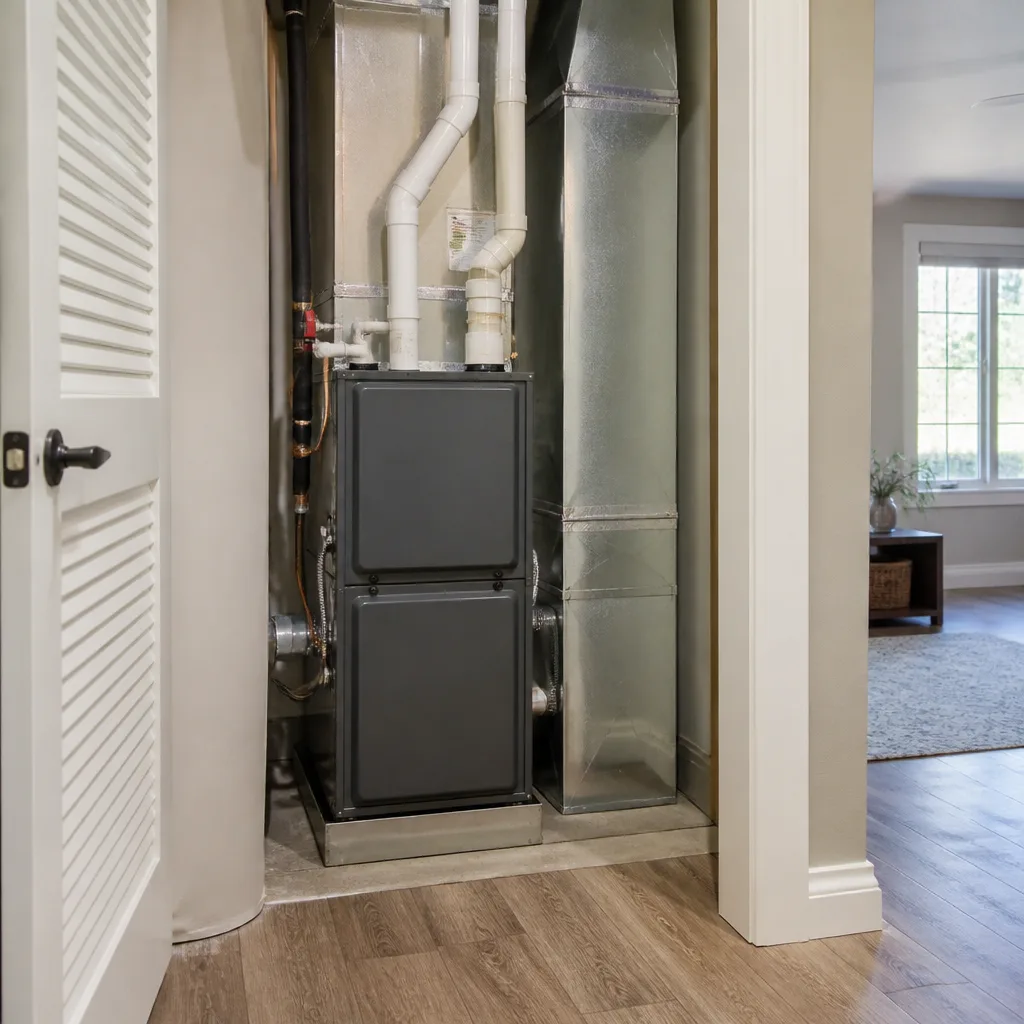
The evaporator coil sits above your furnace or air handler and condenses gallons of water out of Hempstead’s humid air every summer. That water drains through a PVC line, usually into a floor drain or condensate pump. When it clogs, the water backs up, the safety switch trips, and the AC shuts down. Sometimes it overflows before the switch trips, and you get water damage on the ceiling below a second-floor air handler.
A real drain line service is not “blow through the pipe and call it good.” A technician should disconnect the drain line at the coil, run water through it from the coil side, and measure what comes out at the discharge point. The pass/fail is simple: a gallon of water poured at the coil end should exit at the discharge end in less than 30 seconds. If it backs up, the clog is still in there.
The flush procedure we use on Hempstead systems includes three steps: first, a wet-dry vac on the discharge end to pull out the loose sludge; second, a water flush from the coil end to confirm flow; third, if available, a camera or endoscope check of the pipe interior for hard deposits that water alone won’t move. Homes in older Hempstead neighborhoods with original 1970s and 1980s drain lines often have hard mineral scale inside the PVC that requires a drain-whip or an acid-based cleaner. The water test catches it early, before it becomes a no-cool call in August.
Pass/fail standard: Water poured at the evaporator end reaches the discharge point unrestricted. Any slowdown means the line gets treated until flow clears.
Refrigerant Pressure Readings: What to Ask For and What’s Acceptable
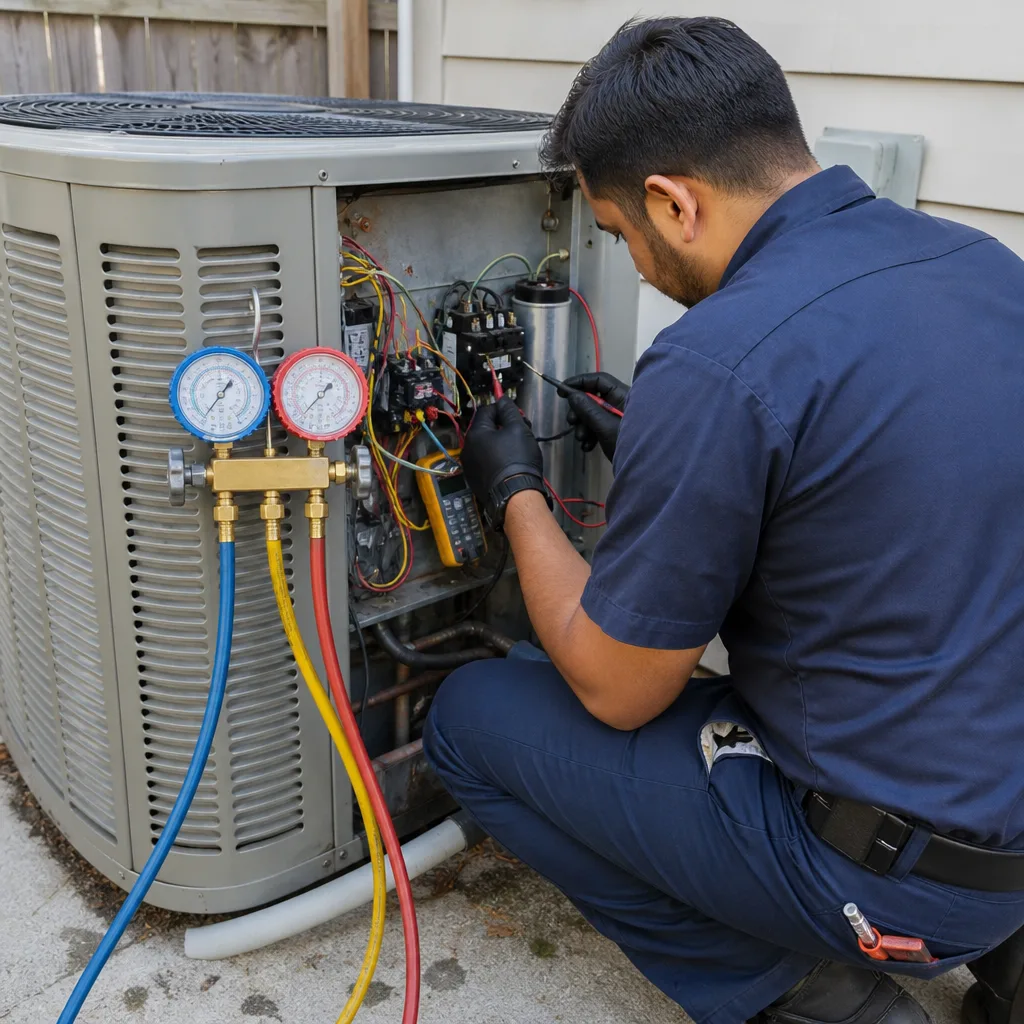
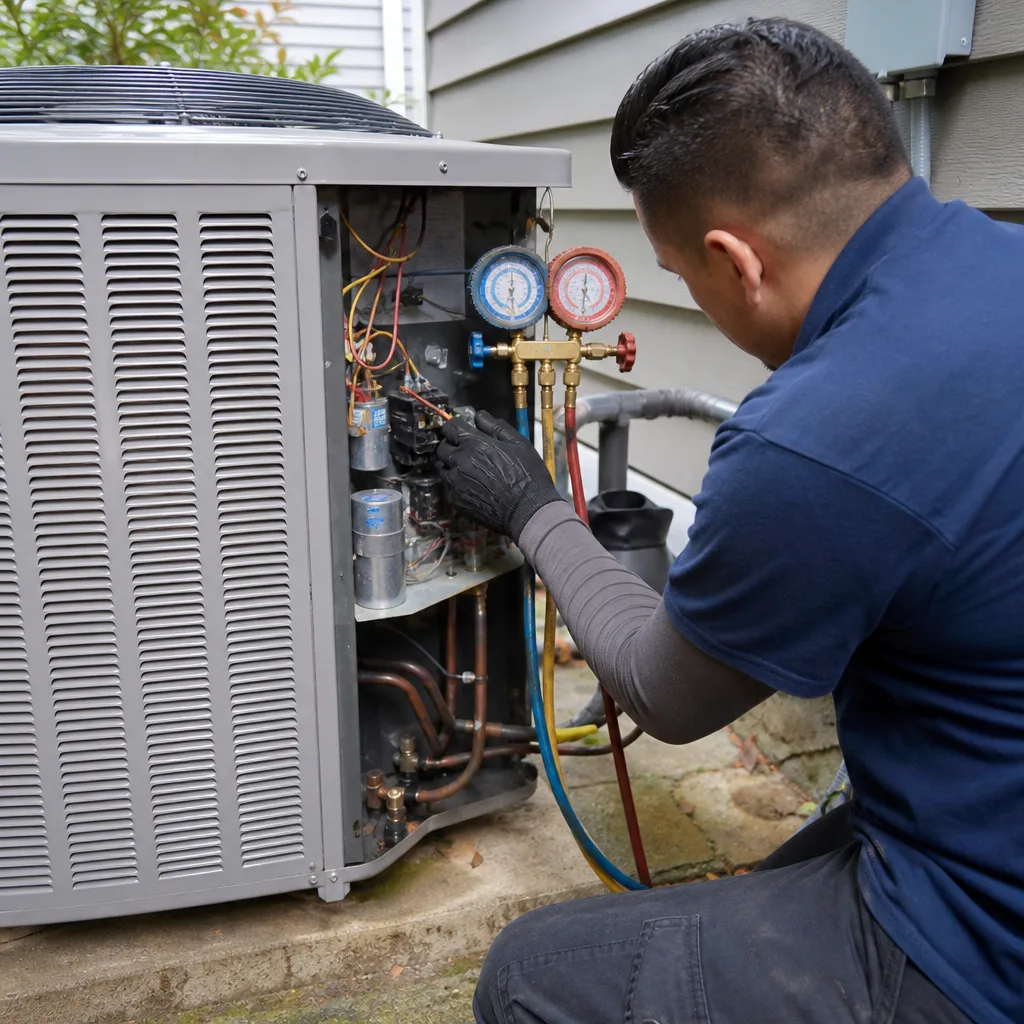
Refrigerant is the cooling fluid sealed inside your AC system. It doesn’t get used up. If the charge is low, there’s a leak. Every maintenance visit should include a pressure reading on both the low and high sides of the system. Hempstead homeowners should ask for these numbers, in writing, on the service ticket.
For most residential R-410A systems, the low-side pressure on an 85-degree day will run roughly 120 to 145 psi, and the high side will run 325 to 420 psi depending on outdoor temperature and indoor load. R-22 systems, still found in older Hempstead homes, run lower: low side around 65 to 75 psi on an 85-degree day. These are not universal numbers. The right reading depends on the specific manufacturer’s charging chart for your unit, the outdoor temperature at the time of service, and the indoor wet-bulb reading. A technician who gives you a number with no explanation of those variables isn’t doing the job.
Low-side pressure well below range, combined with a frozen coil or warmer supply air, points to low refrigerant. High-side pressure above range, with a hot liquid line, points to a restricted metering device or a dirty coil. Neither condition gets fixed by “topping off the charge.” If refrigerant is low to the point of needing added refrigerant, the leak needs to be found and fixed. In Hempstead, repeated seasonal top-offs mean the leak is probably in the evaporator coil or the line set, and the slow cost of refilling refrigerant every summer will eventually exceed the cost of repair.
Pass/fail standard: Readings land within the manufacturer’s chart for the measured temperatures. Anything outside gets investigated, not topped off and ignored.
Electrical Connection Torque Check: Why Long Island Summers Loosen Terminals
Hempstead AC systems run hard from late June through Labor Day, cycle on and off hundreds of times a week, and then sit mostly idle for months. The repeated heating and cooling of electrical connections inside the condenser and air handler causes the metal to expand and contract at the terminal screws. Over time, the screws back off a quarter turn or so. A loose connection adds resistance, which adds heat, which eventually burns the terminal or the wiring.
A maintenance visit should include a torque check on the main line-voltage connections at the condenser contactor, the capacitor terminals, and the air handler’s terminal strip. Most manufacturers list torque specifications in inch-pounds. A 3/8-inch terminal on a contactor typically specs between 20 and 25 inch-pounds. A technician with a torque screwdriver can check and tighten each connection to the manufacturer’s specification and note each value.
What a homeowner should ask for is straightforward: “Did you torque the electrical connections, and can I see the values?” If the answer is “we checked the wires,” that’s not the same thing. In our experience, we’ve found loose terminals on roughly one in every four Hempstead units that haven’t had maintenance in two or more years. Some are borderline, a quarter-turn loose and not yet a problem. Some are heat-discolored, meaning the connection was already arcing. Those are a pending compressor or motor failure, and the fix is a contactor replacement now instead of a compressor replacement later.
Pass/fail standard: Every accessible terminal meets manufacturer torque spec, with values documented on the service ticket. Heat-discolored wires or terminals get replaced, not retightened.
Airflow and Filter Standard: Static Pressure, Not Just a New Filter
Hempstead homes present a specific airflow problem: many were built before central air was standard, and the ductwork in the walls and attic was retrofit. Ducts are often undersized for the system, runs are long, and return air is frequently pulled from a single hallway grill. When airflow is low, the evaporator coil gets too cold and freezes. The system stops cooling, and the ice melts into the drain pan or onto the floor.
Changing the filter matters, but the real airflow test is static pressure. A technician should measure total external static pressure across the blower with a digital manometer. The pass/fail for most residential systems is 0.5 inches of water column or less. Higher static pressure means restricted airflow: too-restrictive filters, closed supply registers, collapsed ducts, or undersized return openings. Some Hempstead homeowners unknowingly make it worse by running “allergen” filters with a MERV rating too high for their system, which chokes airflow and freezes the coil every summer.
The fix for high static pressure depends on where the restriction is. A filter with too high a MERV rating gets swapped for a less restrictive one. Closed or furniture-blocked registers get opened. Collapsed duct sections get replaced. In some older Hempstead homes, the real fix is adding a second return duct to balance the pressure. That’s a bigger job, but it ends the recurring frozen-coil call.
Pass/fail standard: Total external static pressure at or below 0.5 inches water column, with the system running in cooling mode and all registers open. Readings above that get investigated until the restriction is found.
Run Capacitor Test: The $15 Part That Kills Compressors
The run capacitor stores and releases the electrical charge that starts and runs the compressor and outdoor fan motor. Over time, capacitors lose microfarads (the measure of their storage capacity) and the compressor has to work harder to start. A weak capacitor runs hot, strains the compressor, and eventually fails on the hottest day when the unit needs to cycle the most.
A capacitor test takes about two minutes with a digital multimeter. The technician reads the capacitor’s microfarad rating, compares it to the label on the capacitor’s side, and replaces it if the reading is more than 10% below the nameplate. Many technicians will also check the capacitor under load to catch failures that don’t show at rest. The part itself costs $15 to $40 for most residential systems. The labor to test and replace it is minimal. The compressor it protects can run $2,500 to $4,000 to replace on a Hempstead home.
We see weak capacitors regularly in Hempstead’s older housing stock, where the original systems from the 1990s and early 2000s are now 20-plus years old and the electrical components are wearing out on schedule. A $20 capacitor swapped during a maintenance visit in May prevents an emergency call on a 95-degree July afternoon. If your maintenance technician doesn’t test the capacitor, you didn’t get a real maintenance visit.
Pass/fail standard: Capacitor reads within 10% of nameplate microfarads in both the run and start positions. Any reading outside that range gets replaced during the same visit.
Seasonal Timing: When to Schedule Service in Hempstead Before the June Rush
Every Hempstead AC contractor gets flooded with calls the week after Memorial Day, when the first sustained heat wave hits and every system with a problem from the previous summer gets turned on and fails. Appointment waits stretch from same-week to two or three weeks by mid-June, and emergency rates apply after hours.
The realistic window for pre-season maintenance in Hempstead is mid-April through mid-May. The weather is warm enough to run the system and verify pressures, but the dispatch board isn’t stacked yet. Schedule in March if you want your pick of times. Schedule in late May and you’re competing with every other homeowner who just discovered their system won’t start.
There’s a second, often-missed timing point specific to Hempstead’s coastal air: systems that sit idle from October through April accumulate corrosion and dust. Condenser windings get damp, drain pans dry out and crack, and the relay contacts inside the contactor oxidize. A system that ran fine in September can fail in June simply because it sat. A pre-season check in late April takes care of that six-month dormancy before the heat arrives. If you have a heat pump, the timing question is different, since your system runs year-round; Heat Pump Installation in Hempstead has more on how heat pump maintenance schedules differ from traditional AC.
Pass/fail standard: Pre-season maintenance is scheduled and completed between April 15 and May 15, with the system running in cooling mode during the visit. Systems that miss this window should get the same service done as soon as possible, even if it means a higher-demand appointment slot.
Common Mistakes to Avoid
- Skipping the torque check because “it worked fine last year.” Loose connections don’t announce themselves until they arc. By the time you see the scorch marks on the contactor, the compressor has been running hot for a season.
- Using too-high MERV filters on an older Hempstead system. Filters rated MERV 13 and up on a system designed for MERV 8 or below restrict airflow enough to freeze the coil. The ice then thaws into your drain pan and can overflow while you’re at work.
- Power washing the condenser coil. Salt corrosion already weakens the fins. A pressure washer folds them flat and turns a cleanable coil into a replacement. Coil-specific cleaners and low-pressure rinsing only.
- Accepting “topped off the refrigerant” without a leak search. Refrigerant is sealed. If it’s low, there’s a leak, and it will leak again. Topping off without finding the leak is renting your own refrigerant back to yourself every summer.
- Scheduling maintenance after the system has already failed. Maintenance catches the weak capacitor and the clogged drain before they take down the system. Waiting until it breaks turns a $200 visit into a $600 or $1,200 repair.
- Not getting written readings. A service ticket that says “system checked” with no pressures, no capacitance reading, no static pressure number, and no drain flow result isn’t documentation. It’s a receipt, and it won’t help you when a component fails later.
When to Call a Professional
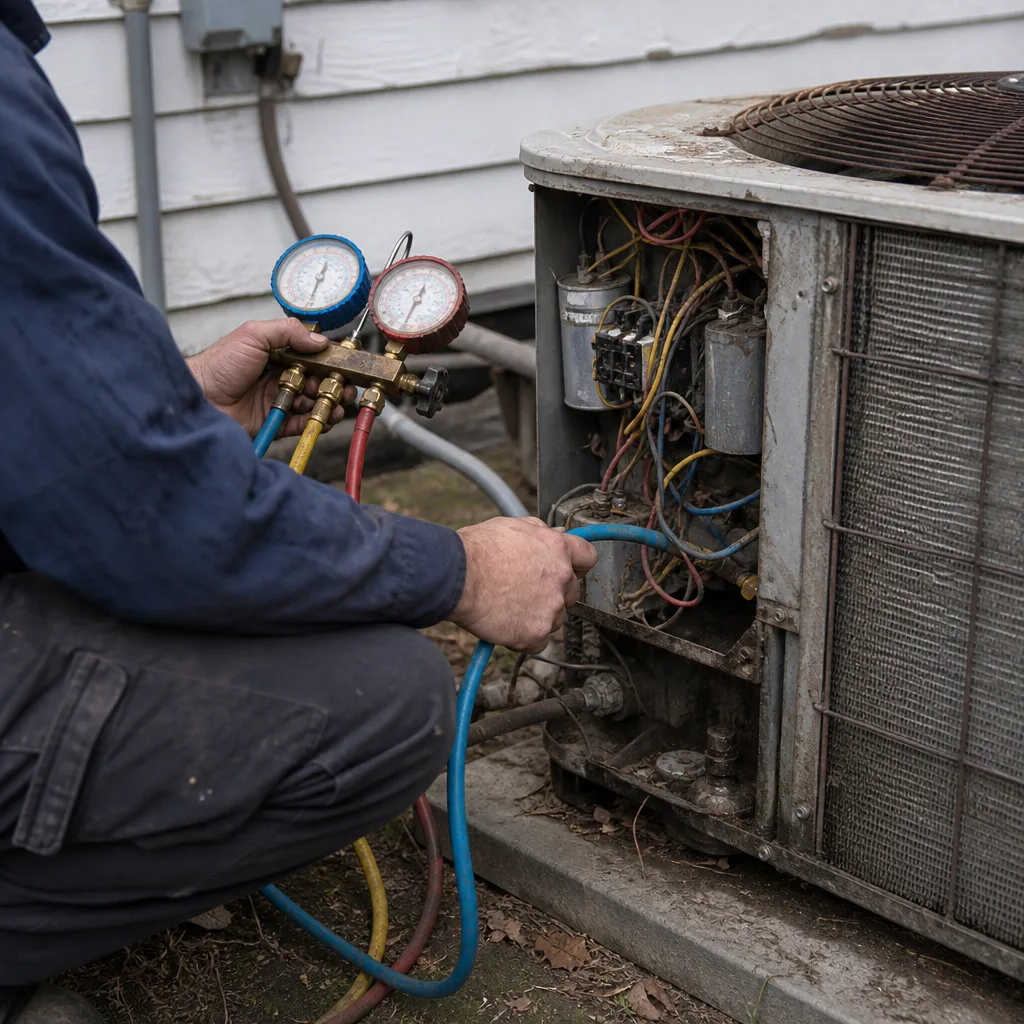
Some maintenance items are homeowner-level: replacing the filter, clearing leaves from around the condenser, checking that the thermostat is set correctly. The rest of this checklist requires a manifold gauge set, a digital multimeter, a torque screwdriver, and the experience to interpret the numbers. Refrigerant under pressure is genuinely dangerous to handle without training, and electrical terminals inside a running condenser carry line voltage. If your system has never had a full documented maintenance visit, or if you’re seeing any of the fail standards from this guide, schedule a professional inspection. Dalton Heating & Air Hempstead offers free estimates in Hempstead – call (516) 559-4840 and our team will schedule a maintenance visit with written readings for every test on this list.
Frequently Asked Questions
AC maintenance in Hempstead typically runs $100 to $250 for a complete visit with written readings, depending on the system’s age, accessibility, and whether it needs a coil cleaning or drain treatment beyond the baseline checks. Some companies offer flat-rate maintenance plans that reduce the per-visit cost when you commit to annual service. Call (516) 559-4840 for an exact quote – our estimates are free and the price is in writing before any work begins.
Once a year, in the spring, before the summer cooling demand starts. Systems within a few miles of the water may benefit from a second fall check because salt corrosion accumulates during the summer run season, but annual spring service is the baseline. If your system is over 15 years old or runs heavily during heat waves, twice-yearly coverage is worth considering.
Early salt corrosion looks like white or gray powdery deposits on the fin edges, concentrated where the fins meet the copper or aluminum tubes. As it advances, the fins get brittle and fold over under light pressure. Late-stage corrosion makes the fins crumble entirely, exposing bare tube. A Hempstead unit within two miles of the water can show early signs in three to four years.
You can replace the filter, keep the condenser clear of leaves and debris, and make sure supply registers are open. You cannot legally or safely check refrigerant pressures or handle refrigerant without EPA certification, and electrical torque checks inside the unit require working around live line voltage. Those items need a professional with the right tools and training. For a complete maintenance visit with written readings, call Dalton Heating & Air Hempstead at (516) 559-4840.
Heat pumps run year-round, so the maintenance schedule shifts. The coil cleaning, drain flush, electrical torque check, and capacitor test still apply, but static pressure and refrigerant readings need to be checked in both heating and cooling modes. For details, see Heat Pump Installation in Hempstead and AC Repair in Hempstead for how service works on dual-mode systems.
A complete maintenance visit with coil inspection, drain flush, pressure readings, electrical torque check, capacitor test, and static pressure measurement takes 60 to 90 minutes for most residential systems in Hempstead. Systems with difficult attic access or added components like a whole-house dehumidifier can take longer. A visit that lasts 20 minutes is not covering the items on this checklist.
The Bottom Line
Hempstead’s climate and coastal air create failure patterns that generic maintenance lists don’t address: salt-corroded condenser coils, accelerated electrical terminal loosening from heavy seasonal cycling, and drain lines clogged by humidity-driven condensation. A real maintenance visit covers each of these with a measurable pass/fail standard and a written record of every reading. If you’re in Hempstead and your current technician can’t show you the numbers, it’s time to find one who will. Dalton Heating & Air Hempstead home services all of Hempstead with maintenance visits that include documented readings for every item on this checklist. Pair your cooling maintenance with Furnace Repair in Hempstead for year-round coverage on both systems. Call (516) 559-4840 for a free estimate on a maintenance visit, or AC Repair in Hempstead if your system has already failed.
Written by Marco Benitez, Owner at Dalton Heating & Air Hempstead, serving Hempstead since 2003.
See the difference
 Before
 After
After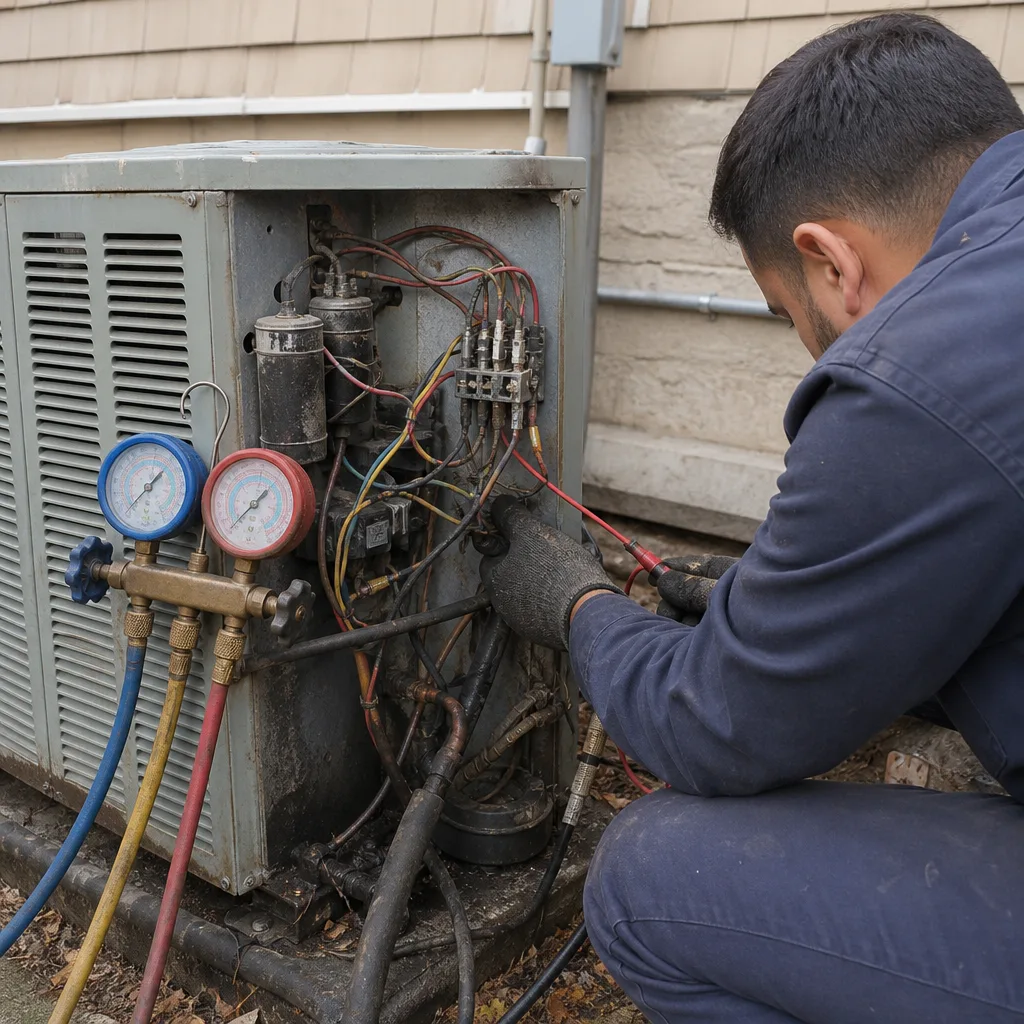 Before
 After
After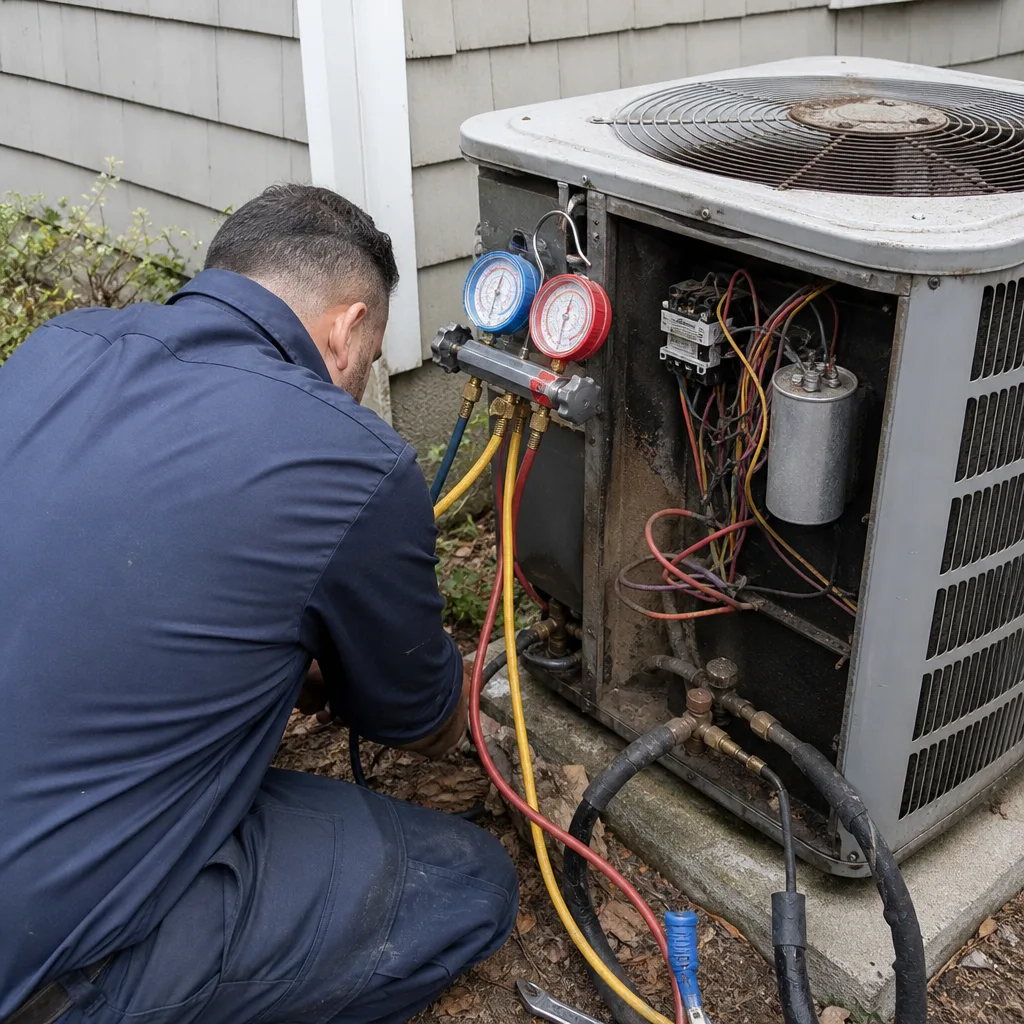 Before
 After
After