
Last updated October 16, 2026
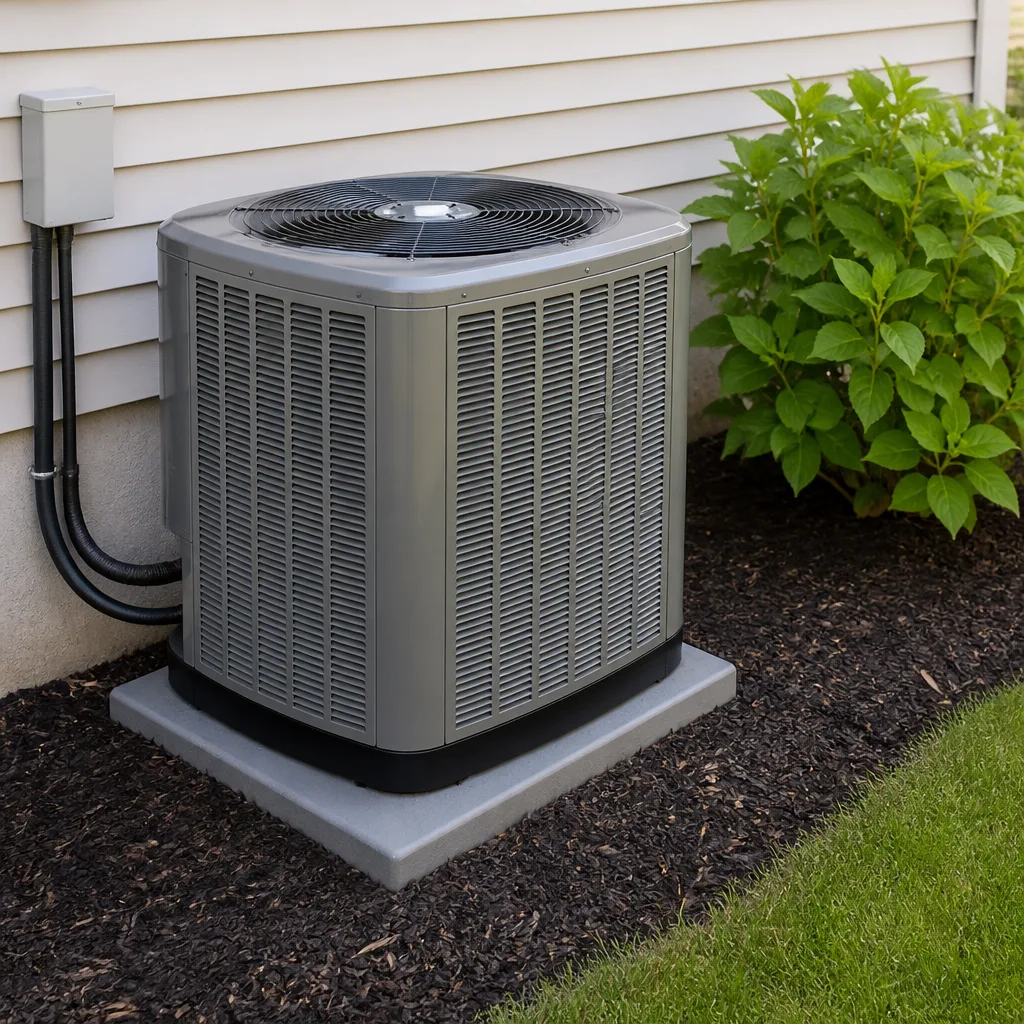 AC repair
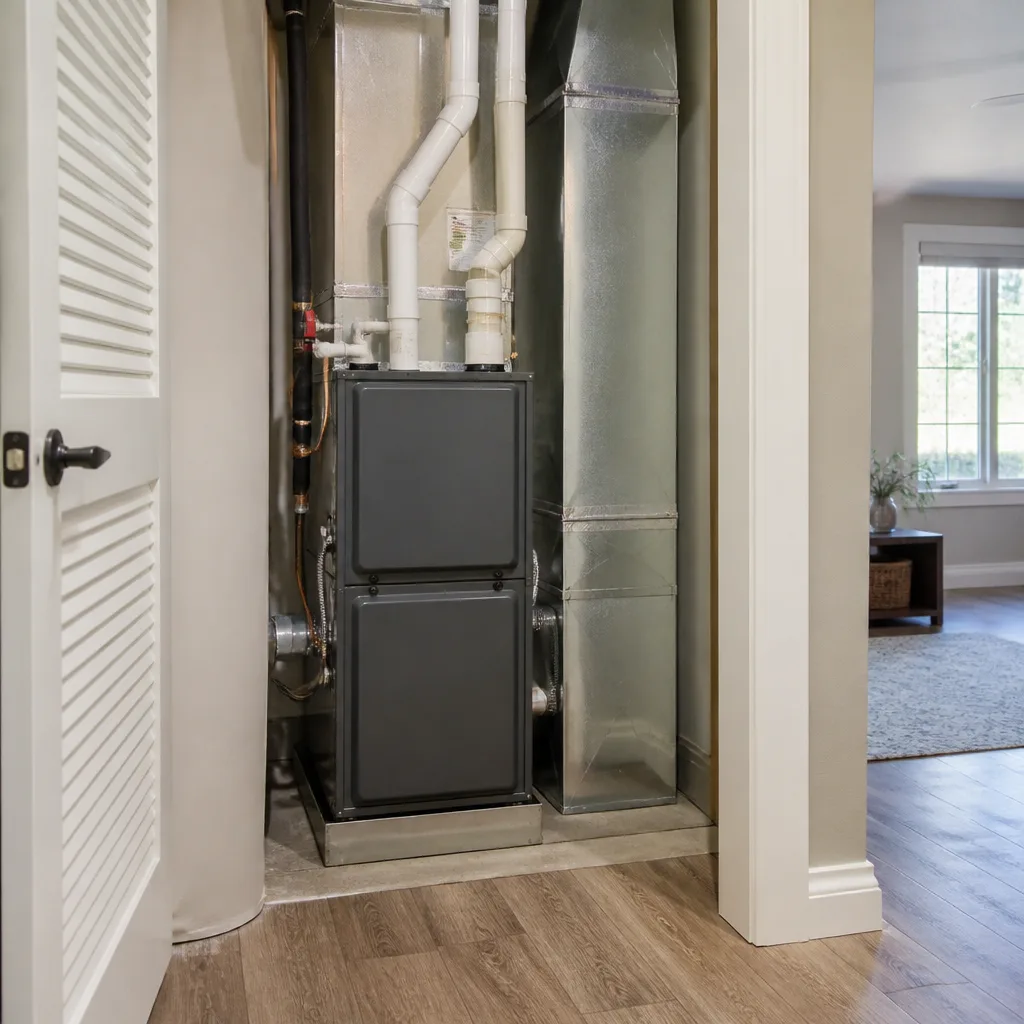 Furnace & heating
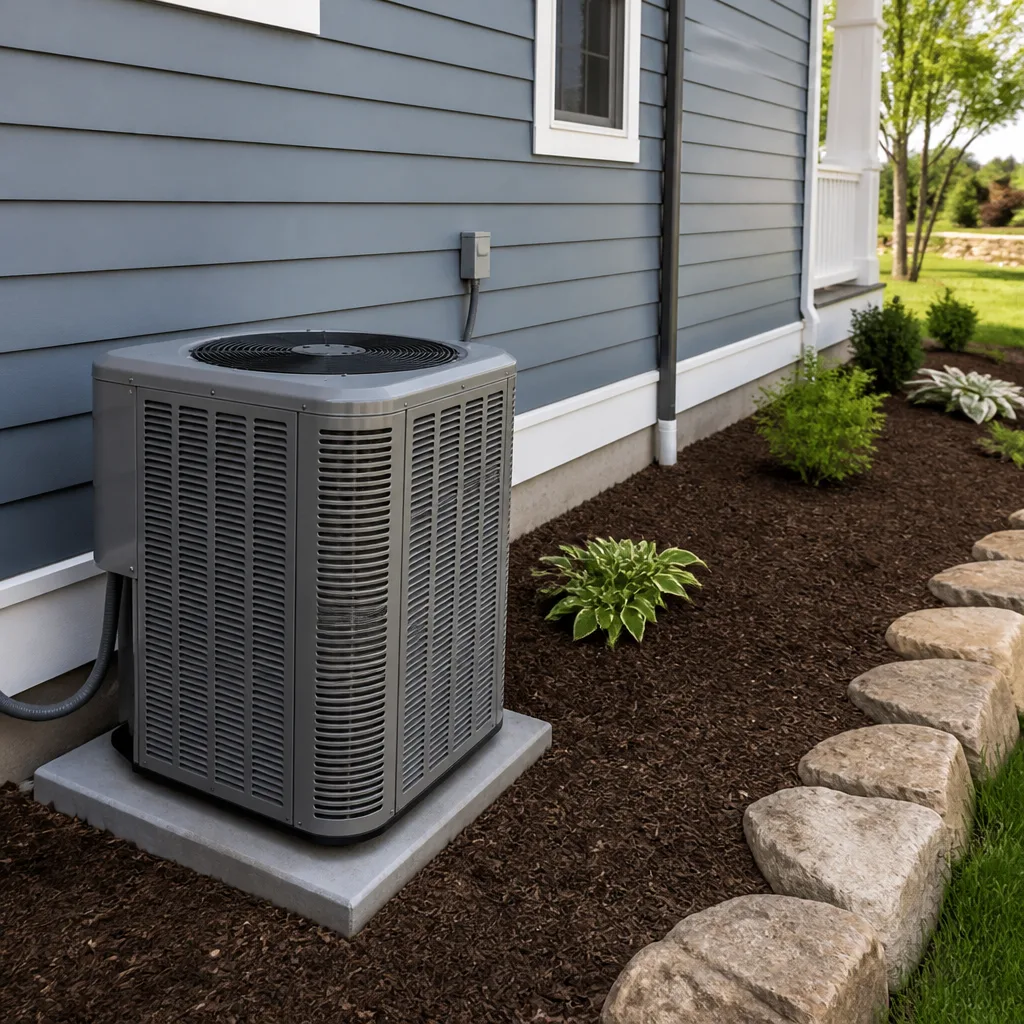 Heat pumps
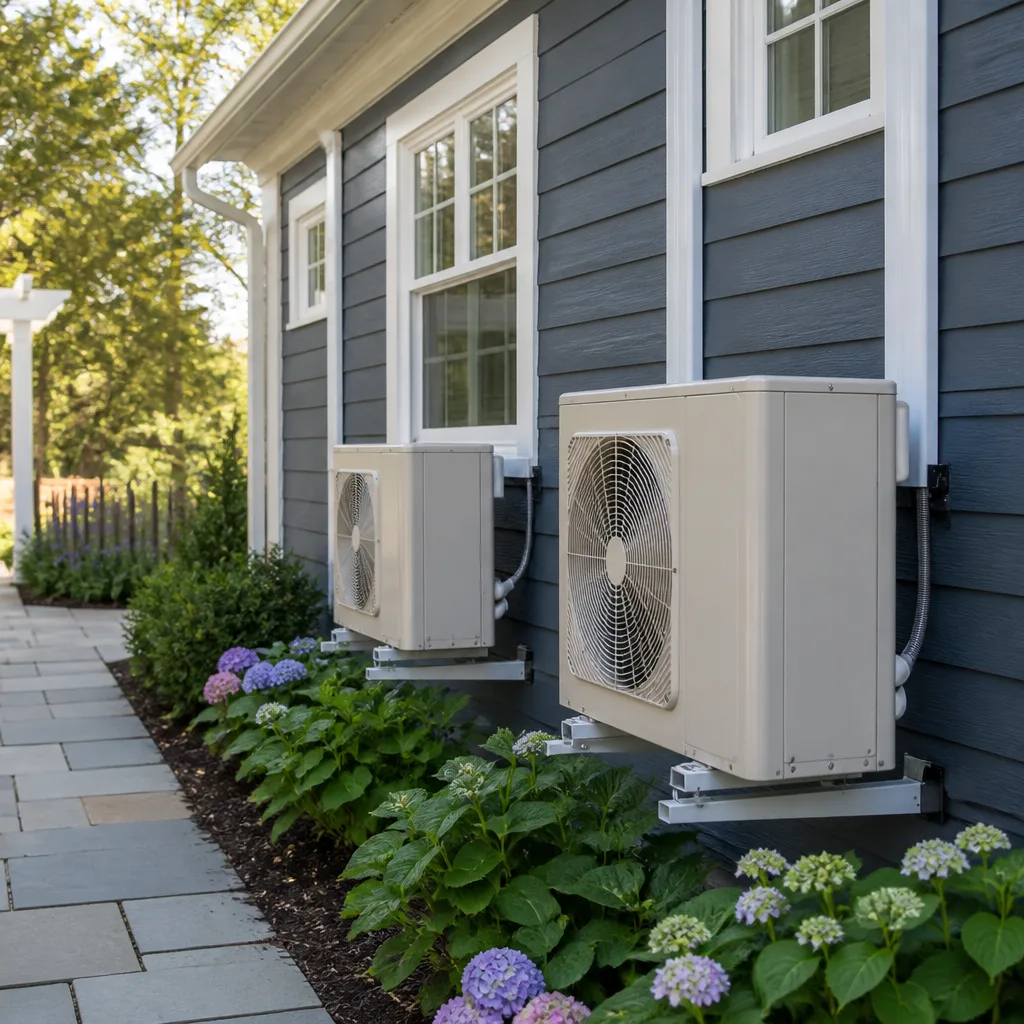 Ductless mini splits
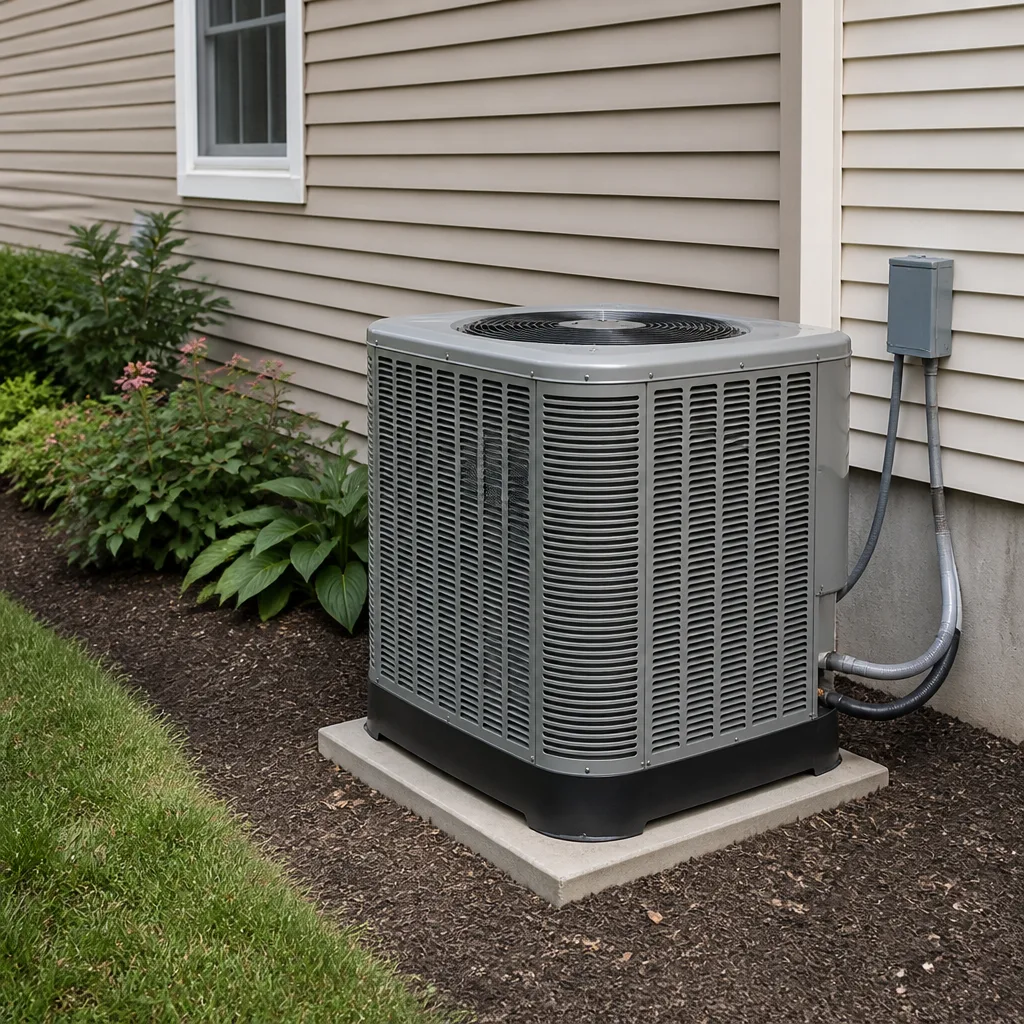 Carrier
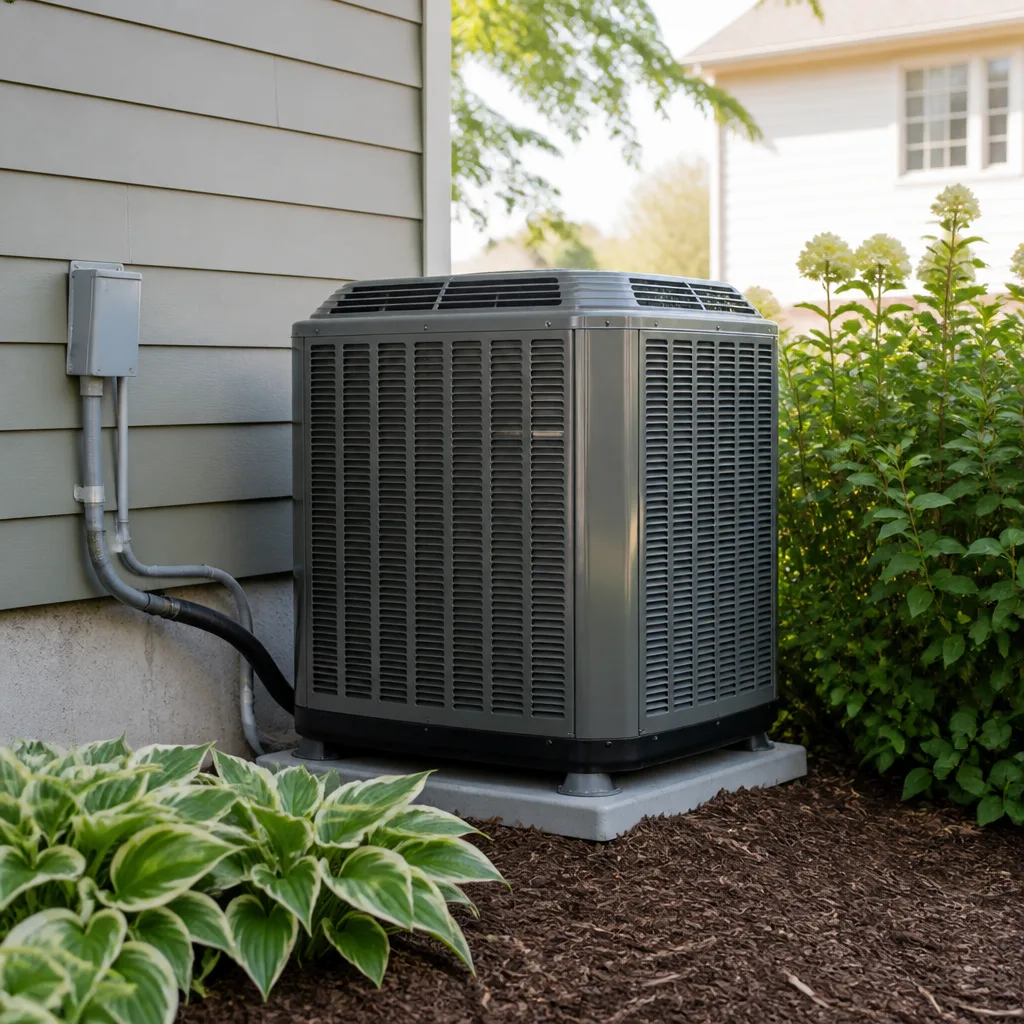 Trane
Trane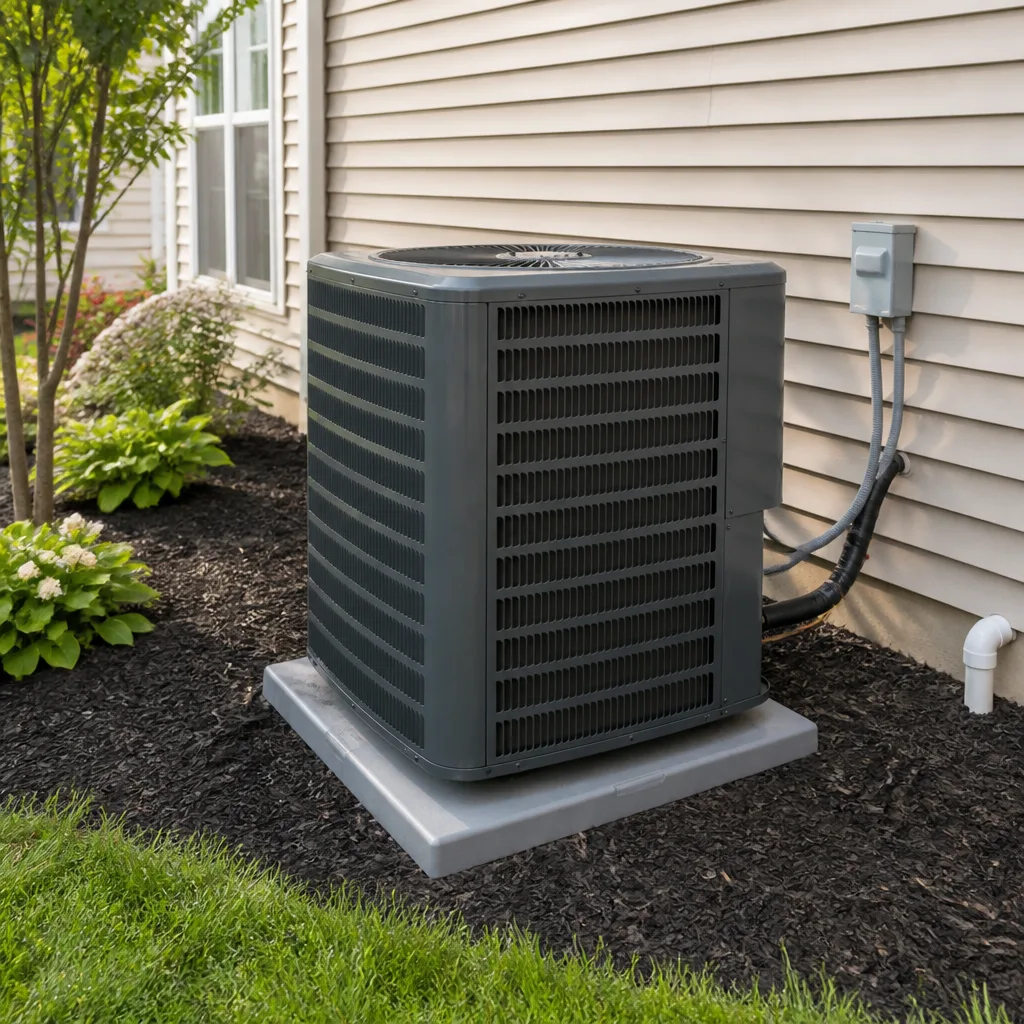 Goodman
Seasonal tune-up and full diagnostic on your Carrier, Trane, or Goodman system - readings shown to you before any repair is proposed
Diagnosis first, numbers second - you approve the repair price before a single part goes in.
Get your free estimateThe Complete Guide to HVAC in Hempstead
Hempstead’s housing stock tells a story that most generic HVAC guides never read. A large share of homes here were built before 1960, which means the ductwork, electrical panels, and wall clearances were designed around heating and cooling equipment that no longer exists. If you live in a postwar cape on a slab or a split-level near Hofstra, every HVAC decision you make today, from equipment selection to contractor choice, has to account for that starting point. This guide maps the real conditions in Hempstead: salt air off the South Shore, Nassau County code enforcement, SEER2 equipment rules, and the specific failure patterns we see across this market. You’ll learn what things actually cost, which decisions matter most, and how to avoid paying twice for work that should have been done right the first time.
Quick Answer
HVAC work in Hempstead means matching modern equipment to aging housing stock, Nassau County permit rules, and South Shore salt-air conditions. Most furnace repairs in Hempstead run $150 to $450 depending on the part, full AC replacements typically land between $5,500 and $11,000, and any contractor you hire should put the price in writing before work starts and back repairs with a written guarantee, not a verbal assurance. The smartest move for most Hempstead homeowners is to get a written, fixed-price estimate from a contractor who understands pre-1960 construction and can service multiple major brands, as explained in our How to Hire a HVAC Contractor in Hempstead: A Step-by-Step Guide.
Styles & brands we work with
Table of Contents
- What Hempstead’s Housing Stock Means for HVAC
- Salt Air and Condenser Coil Lifespan on Long Island
- Nassau County vs. Town of Hempstead: Who Permits What
- SEER2 and What’s Legal to Install in New York Today
- Real Hempstead Pricing: Repairs and Replacements
- Written Guarantees: What a Real One Covers
- Maintenance That Prevents Hempstead’s Most Common Failures
- How to Choose a Contractor in Hempstead Without Getting Burned
What Hempstead’s Housing Stock Means for HVAC
Walk through neighborhoods north of Hempstead Turnpike or the streets around Clinton Street and you’ll see the same pattern: capes, ranches, and split-levels built between the late 1940s and early 1970s. Many sit on slab foundations. Many have furnaces tucked into hall closets or crawlspaces. And many have ductwork that was sized for a gravity furnace or an early forced-air system, not for the airflow demands of a modern high-efficiency heat pump or two-stage air conditioner.
Here’s what that means in practical terms:
- Slab-on-grade homes can’t run new ductwork under the floor. If you want central air where none exists, or you need to replace corroded ducts, the work usually goes through the attic or requires a ductless mini-split system.
- Cape-style homes often have knee-wall attic spaces that make duct runs possible but tight. Equipment clearances matter a lot here. A condenser that needs 24 inches of side clearance may not fit a narrow side yard in Hempstead.
- Older electrical panels are a hidden cost driver. Many Hempstead homes still have 100-amp panels. A heat pump with electric backup strips can pull enough current to require a panel upgrade before installation, adding $1,800 to $3,500 to the job.
- Existing ductwork in pre-1960 homes often leaks 20 to 30 percent of conditioned air into attics and crawlspaces before it reaches a register. We’ve tested systems in Hempstead where sealing and insulating the ducts delivered more comfort improvement than a new furnace.
The first question any contractor should ask is not “what equipment do you want?” but “what is your house built on, and where will the equipment and ductwork go?” If they don’t ask, they’re not thinking about your home. They’re thinking about their inventory.
Salt Air and Condenser Coil Lifespan on Long Island
Hempstead sits close enough to the South Shore that salt-laden air moves inland, especially during the shoulder seasons. We see the effect on outdoor condenser coils every week: corrosion on the aluminum fins, pitting on copper tubing, and premature compressor failures that owners in inland towns rarely experience.
The average condenser coil in Hempstead lasts 8 to 12 years before corrosion becomes a real problem. In Nassau County communities closer to the water, that window shrinks further. The fix is not complicated, but it has to be specified in writing before installation:
- Demand a coastal-coated coil. Manufacturers like Carrier, Trane, and American Standard offer factory-applied epoxy or hydrophilic coatings on condenser coils. A coastal coating can add 3 to 7 years of useful coil life in Hempstead’s air.
- Ask for the coil specification on the quote. If the estimate says “standard coil,” that is the wrong coil for this area. The written estimate should name the coating type.
- Plan for annual coil cleaning. Salt deposits build up even on coated coils. A coil cleaning each spring removes the corrosive film before it does damage. This is a maintenance item worth budgeting for every year.
- Consider placement. A condenser placed on the south or east side of a Hempstead home, or directly exposed to prevailing coastal winds, corrodes faster than one tucked against a north-facing wall with some vegetation or fencing to break the airflow. Placement is an equipment-lifespan decision, not just an aesthetics decision.
When you compare replacement quotes, ask this exact question: “Is the condenser coil coastal-coated, and does the written quote state the coating?” A contractor who hesitates on that question is selling you a system designed for a different climate.
Nassau County vs. Town of Hempstead: Who Permits What
Hempstead sits inside a two-layer permit system that confuses a lot of homeowners. The Town of Hempstead Building Department handles most residential HVAC permits, but Nassau County steps in when the work involves certain gas, electrical, or structural changes. What that means in practice: a furnace replacement might require a Town of Hempstead permit, while a gas line upgrade for that furnace might also trigger a Nassau County inspection.
Here is the practical breakdown for the most common projects:
- Furnace replacement (like-for-like): Town of Hempstead permit, typically a few hundred dollars. The permit fee should be a line item on your written estimate, not hidden in the labor cost.
- AC replacement or new condenser: Town of Hempstead permit, plus an electrical inspection if the disconnect or circuit changes.
- Heat pump installation: This often requires both a building permit and an electrical permit. In Hempstead, heat pump installations have different clearance and noise rules than traditional AC condensers, and the town enforces them.
- Any gas line work: Nassau County typically holds jurisdiction over gas piping modifications. If your furnace conversion or new installation moves a gas line, expect a county-level inspection.
- Ductwork changes: If you’re adding or substantially altering duct runs, the Town of Hempstead permit covers the work, but the system must meet current airflow and fire-damper codes for the year of the permit, not the year the house was built.
Any contractor who says permits are optional or “we can do it without one” is asking you to assume liability for work that may not pass code. Our position at Dalton Heating & Air is simple: the permit and inspection are part of the job, priced in writing up front, and scheduled before the equipment goes in. If a Hempstead inspector finds a code violation on a permitted replacement, the contractor fixes it. If the work was never permitted, the homeowner owns the problem alone.
SEER2 and What’s Legal to Install in New York Today
In January 2023, the Department of Energy changed the efficiency testing standard for residential HVAC equipment from SEER to SEER2. The new standard uses more realistic operating conditions, which means a system rated 16 SEER under the old test may rate 15 or 15.5 SEER2 under the new one. More importantly, New York adopted new minimum efficiency requirements tied to SEER2, and equipment that does not meet the new minimums can no longer be legally installed as new stock.
What this means for a Hempstead homeowner getting quotes today:
- Any new AC or heat pump installed today must meet current SEER2 minimums. For most split systems in the North region, that floor is around 14 to 15 SEER2, depending on the system type. Reputable contractors won’t offer anything below the legal minimum.
- Older equipment still in the supply chain is not automatically illegal. Contractors can still install units manufactured before 2023 if they meet the relevant standards for their region. But you should ask directly: “What is the SEER2 rating of this exact unit, and is it current production?”
- The rating affects your utility bill, not just the environment. A 14 SEER2 system costs more to run per cooling season than a 16 or 17 SEER2 system. In Hempstead, where summer humidity pushes run times higher, the difference can be $120 to $250 per year depending on system size and household usage.
- Rebates from PSEG Long Island tie to SEER2 and ENERGY STAR ratings. A higher-efficiency system may qualify for a rebate that narrows the price gap. A written quote should show the rebate as a separate line item, not folded into the total.
The practical takeaway: when you compare replacement quotes in Hempstead, ask for the SEER2 rating in writing, not just the SEER number on the brochure. If a contractor can’t tell you the SEER2 of what they’re selling, keep looking.
Real Hempstead Pricing: Repairs and Replacements
Pricing in Hempstead reflects the cost of doing business in Nassau County: insurance, permit fees, technician wages, and the reality of working in older homes with tight access. For a detailed look at what drives these numbers, see our HVAC Cost Breakdown: The Hempstead Homeowner’s Reference for 2026. Here are the ranges we see on actual jobs in this market, as of early 2026:
Repair pricing (typical ranges):
- Furnace repair (ignitor, flame sensor, pressure switch, gas valve): $150 to $450 depending on the part and access.
- AC repair (capacitor, contactor, thermostat replacement): $180 to $480.
- Refrigerant recharge (topping off the cooling fluid your system needs to reach set temperature): $200 to $500, but a recharge should only follow a leak test. Adding refrigerant without finding the leak is paying twice.
- Condensate pump replacement: $150 to $350.
- Blower motor replacement: $400 to $850 depending on whether it’s a single-speed or variable-speed motor.
- Circuit board replacement: $250 to $700, and this is the repair most often misdiagnosed by techs who swap parts until something works.
Replacement pricing (system-level, installed):
- Central AC replacement (condenser and evaporator coil, using existing ductwork): $5,500 to $9,500 depending on efficiency and brand.
- Full furnace replacement (gas, 80 percent vs. 96 percent efficiency): $3,800 to $7,000.
- Heat pump installation (air-source, replacing both heating and cooling): $8,000 to $15,000 depending on system capacity and whether a ducted or ductless configuration is required.
- Ductless mini-split (single zone): $3,500 to $6,000 per zone. Multi-zone systems scale from there.
- Full system replacement (furnace and AC together): $9,000 to $16,000.
These ranges assume proper permitting, permit fees, and professional installation. Quotes below these floors in Hempstead usually mean one of three things: no permit, no coastal coil protection, or a crew that will be gone before the first hot day of July.
We write the price before any work starts, on every job, without exception. The estimate you sign is the price you pay. If the job requires something unexpected, you hear about it before we proceed, and the revised price is in writing too. That’s not a sales tactic. It’s The Garrison Standard, and it applies to every Dalton Heating & Air job in Hempstead.
Written Guarantees: What a Real One Covers
Most contractors in Hempstead will tell you their work is guaranteed. Very few will hand you a document that says so. A verbal assurance is not a guarantee. A guarantee is a written document that names the work performed, the start date, the coverage period, and what happens if the repair fails.
Here is the benchmark to use when comparing contractors:
- A real repair guarantee is at least 12 months. Not 30 days. Not 90 days. Twelve months, in writing. If a contractor offers less, ask why they don’t trust their own work.
- A real guarantee covers parts and labor. A warranty on a part is not the same as a guarantee on the repair. If a capacitor fails after three months and the manufacturer’s warranty covers the $30 part but the contractor charges $200 to come back and install it, you got a parts warranty, not a repair guarantee.
- A real guarantee states the return visit is free. At Dalton Heating & Air, the guarantee is simple: the repair is guaranteed in writing for a full year. If it fails in that time, we return at no charge. That’s our 365-Day Done Right Promise, and it’s not an upgrade you pay for. It’s the baseline.
- A real guarantee names the company standing behind it. If the document doesn’t have the contractor’s business name, license information, and owner’s name on it, it’s a piece of paper.
Marco Benitez, who leads Dalton Heating & Air Hempstead, put the standard this way: “If I’m not willing to write down that I’ll come back for free, I’m not confident enough in the repair to charge for it.” That’s the filter every Hempstead homeowner should apply.
Maintenance That Prevents Hempstead’s Most Common Failures
Maintenance in Hempstead should not be generic. It should be mapped to the three conditions that actually shorten equipment life here: salt air, humid shoulder seasons, and aging ductwork. Here’s what a Hempstead-specific maintenance plan looks like:
- Spring coil cleaning and salt inspection. The outdoor condenser coil gets washed to remove salt deposits and debris. The technician checks for early corrosion on the coil fins and the refrigerant line connections.
- Summer drain line and condensate pump check. Hempstead’s humidity fills drain pans and stresses condensate pumps. A clogged drain line in July means water damage to the furnace cabinet or the ceiling below an attic unit.
- Fall heat exchanger and flue inspection. Before the first cold snap, a technician checks the heat exchanger for cracks and the flue for blockages. A cracked heat exchanger is a carbon monoxide risk, not a comfort issue.
- Ductwork leak check. Using a visual inspection and airflow measurements, the technician identifies obvious duct leaks or disconnected sections. In pre-1960 Hempstead homes, this is often the single highest-return maintenance item.
- Filter replacement and airflow verification. The correct filter for a Hempstead home with old ductwork is often a mid-level MERV 8 filter, not a high-restriction MERV 13. Too-restrictive filters on under-sized ducts reduce airflow and shorten equipment life.
A maintenance visit at a flat rate with a written report of what was actually found is the standard. Our technicians are not paid on what they sell during a maintenance visit. If something needs attention, you get a written quote. If nothing does, you get a clean report and a handshake.
How to Choose a Contractor in Hempstead Without Getting Burned
The homeowners who call us after a bad experience in Hempstead almost always describe the same sequence: a low quote, a no-show at the stated window, a surprise upcharge at the door, and a repair that failed within months with no call back. The pattern is avoidable if you screen for the right things up front, as covered in our DIY vs Professional HVAC: The Hempstead Homeowner’s Decision Guide.
- Ask for a written price before the work starts. Not an estimate over the phone. A written, itemized price. If the contractor won’t commit to a number in writing, end the conversation.
- Ask what the repair guarantee is, in writing. If they say “all our work is guaranteed” but won’t produce a document, that’s a verbal assurance. See the section above.
- Ask which brands they service. We service all nine major residential HVAC brands: Carrier, Trane, Lennox, Goodman, Rheem, York, Daikin, Bryant, and American Standard. You want a contractor who works on your equipment, not one who only installs one brand and recommends replacement when repair is the better call.
- Ask about the technician before they arrive. You should know who is coming to your door. Background-checked, uniformed technicians are not a luxury. They’re the minimum standard for letting a stranger into your home.
- Call the company at 8 p.m. on a Saturday. If you get a voicemail tree, that’s how it will feel during a January furnace failure. We answer with a live person, 24 hours a day, 7 days a week. No callback window. No “we’ll get back to you Monday.”
- Ask about the Garrison Code. Dalton Heating & Air operates under The Garrison Standard, and every job follows The Garrison Code: arrive inside the stated window, price in writing before starting, do the job by the book, leave the site clean, and stand behind the work for a full year. That code exists so you can hold us to something, not because it sounds good in a brochure.
Common Mistakes to Avoid
- Recharging refrigerant without finding the leak. A refrigerant recharge is topping off the cooling fluid your system needs to reach set temperature. If the tech doesn’t find and fix the leak, you’ll pay for another recharge next season. In Hempstead, where summer run times stretch long, a small leak becomes a big bill quickly.
- Installing a standard condenser coil near the coast. Salt air will eat a standard coil years before its rated lifespan. Demand a coastal-coated coil in writing.
- Skipping permits to save a few hundred dollars. An unpermitted furnace or AC replacement can be flagged at resale, and any code violation becomes yours to fix. The Town of Hempstead and Nassau County both have inspection authority. Don’t build a liability into your house to save 5 percent on a quote.
- Choosing equipment before assessing ductwork. A high-efficiency system on leaky, under-sized ducts is like putting a race engine in a car with a clogged fuel line. You pay for performance you never feel.
- Buying from a contractor who won’t write the guarantee. A repair is only as good as the document that backs it. If the guarantee is verbal, it doesn’t exist.
- Ignoring electrical panel capacity. A heat pump or high-efficiency furnace may need a panel upgrade. Budget for it before the equipment arrives, not when the install crew discovers the panel is maxed out.
- Waiting until the first heat wave to replace a failing system. July replacement calls in Hempstead mean two things: higher demand pricing and longer wait times. If your system is 12 years old and limping, replace it in April or October when contractors have capacity and you have negotiating room.
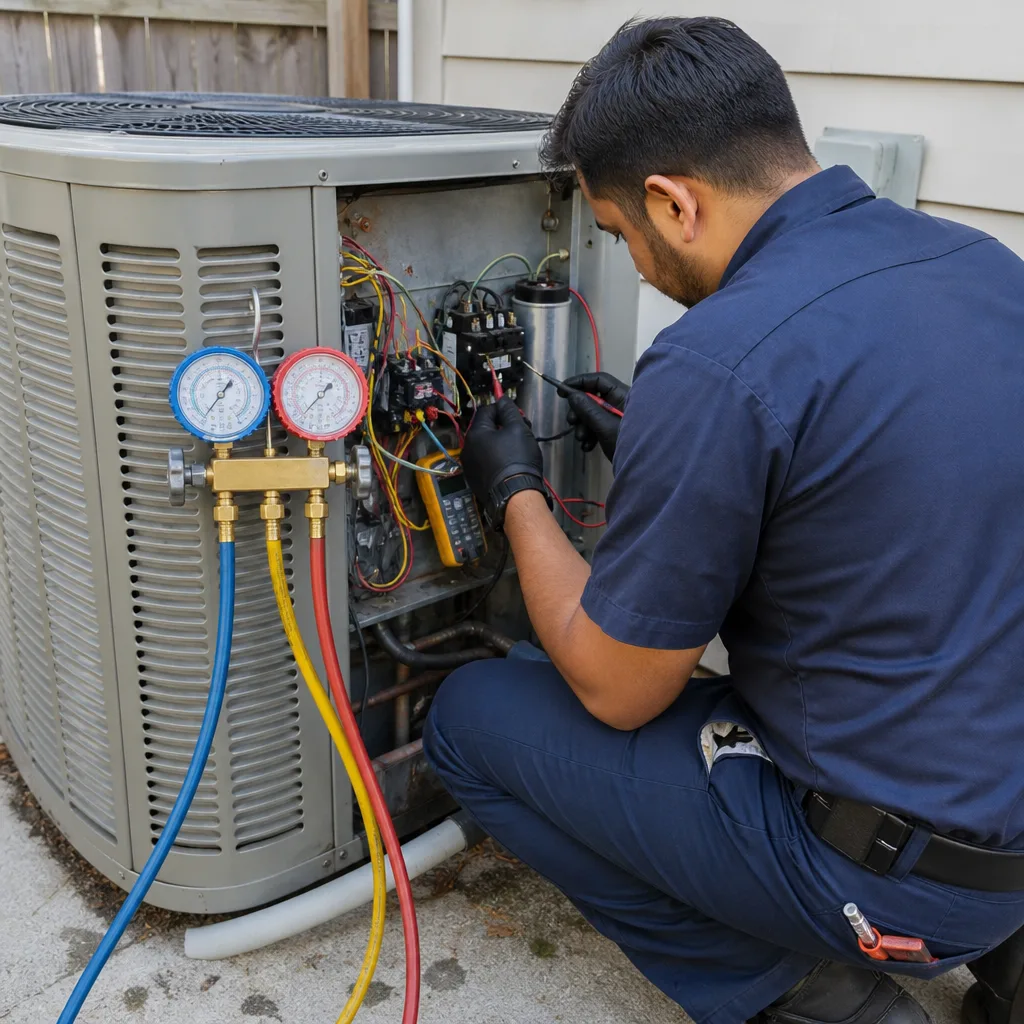
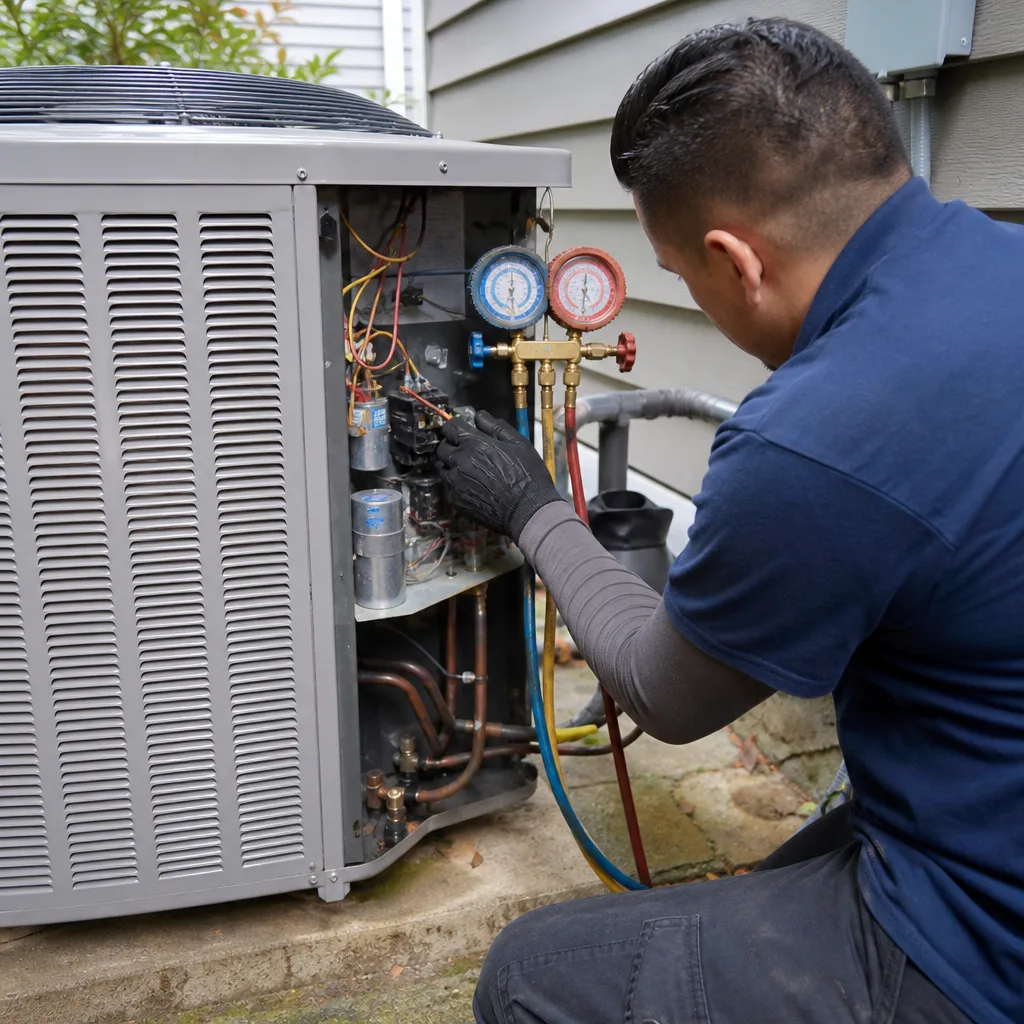
See the difference
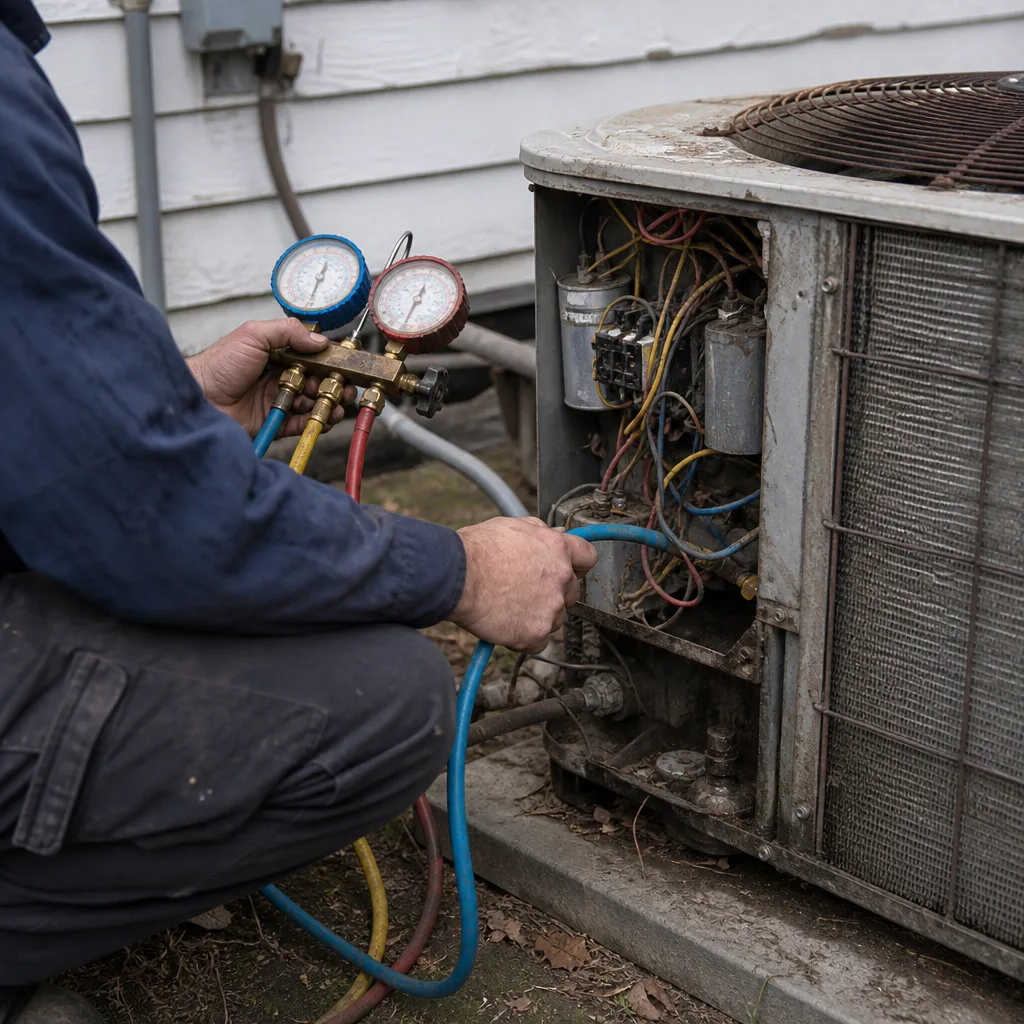 Before
 After
After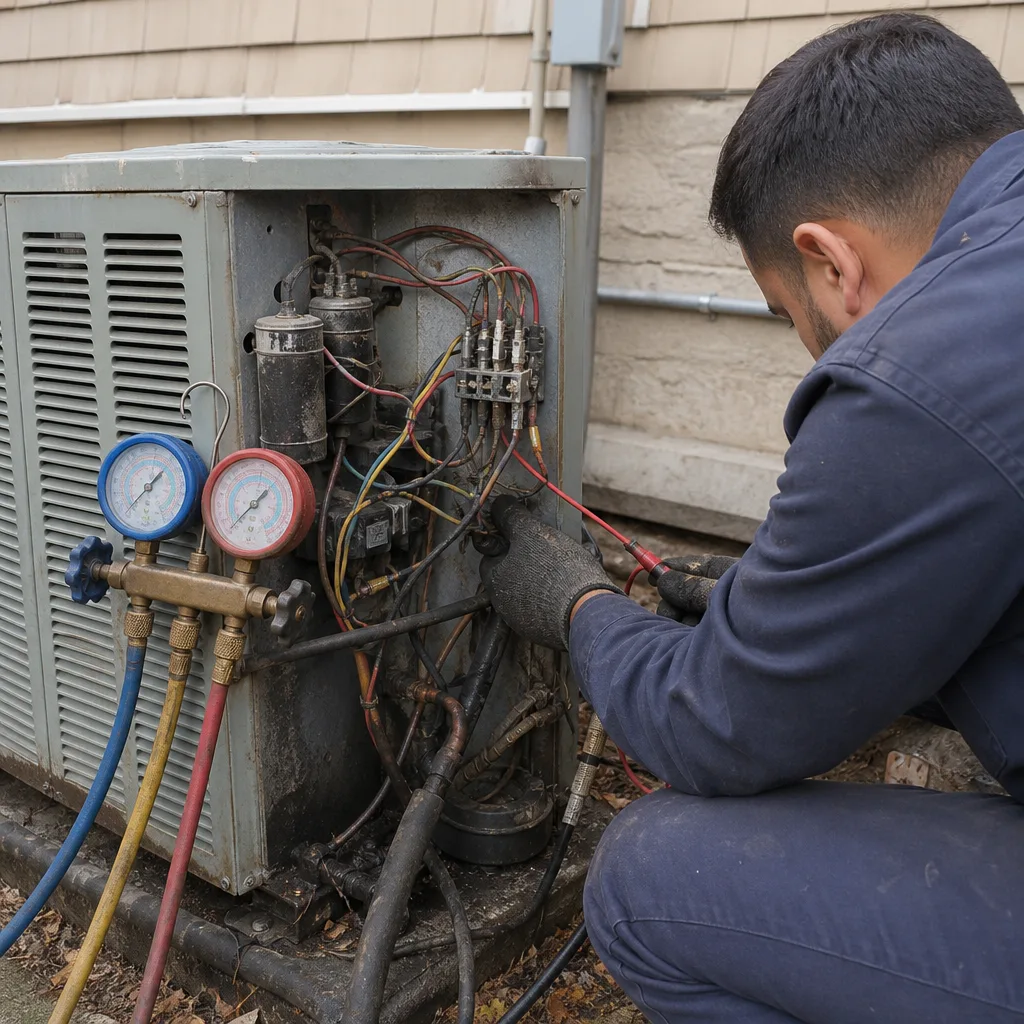 Before
 After
After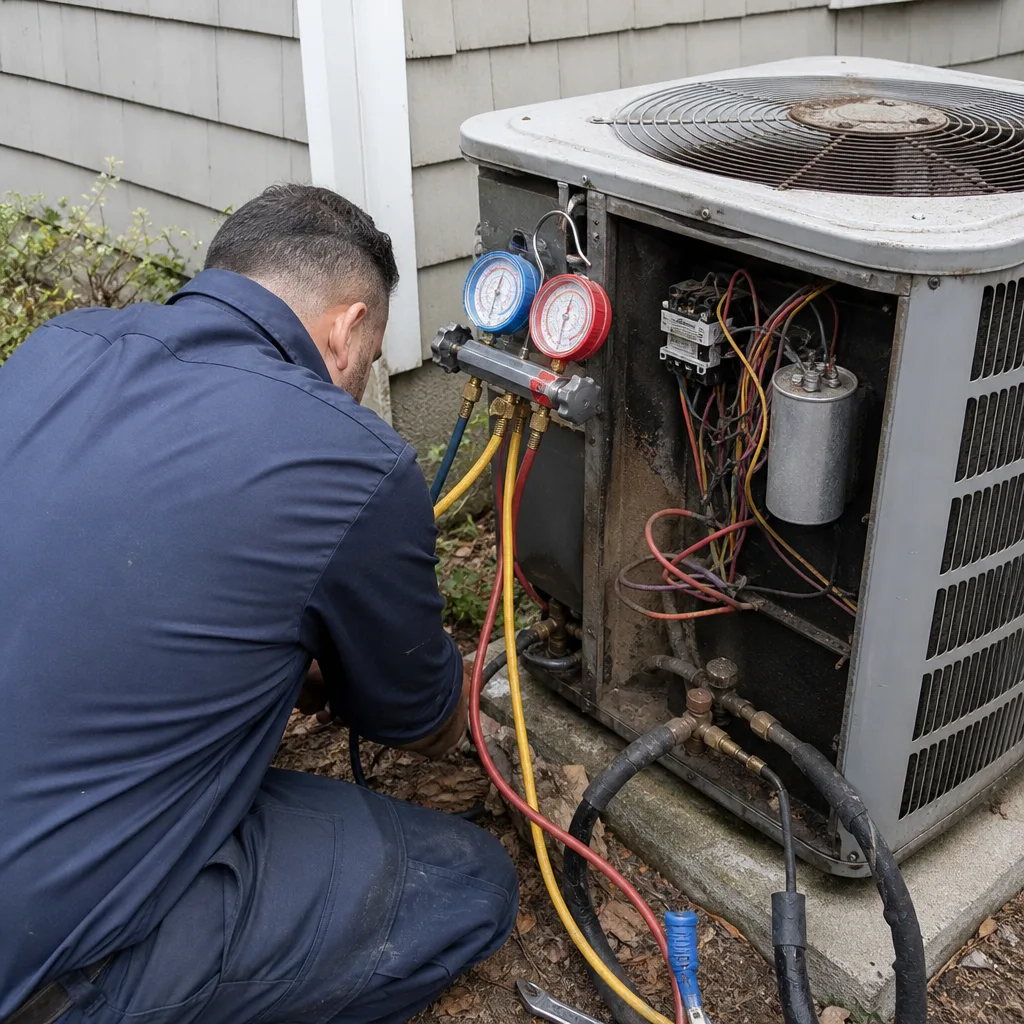 Before
 After
AfterWhen to Call a Professional
Some HVAC issues are maintenance items you can handle: changing a filter, clearing debris from around the condenser, checking that the thermostat is set correctly. Other situations call for a trained professional. Call a technician if you notice a burning smell from your furnace, warm air blowing from your AC vents, ice forming on the refrigerant lines or evaporator coil, or electrical issues like a breaker tripping repeatedly when the system runs. Any suspected gas leak is an emergency: leave the house and call for help immediately. Carbon monoxide alarms that sound are not false alarms until a professional has verified the source. Dalton Heating & Air Hempstead offers free estimates in Hempstead. For a heating or cooling issue you can’t diagnose, call (516) 559-4840 and speak to a live person. We’ll get a uniformed technician to your door inside the stated window, with the price in writing before any work begins.
Frequently Asked Questions
A full furnace and AC replacement in Hempstead typically costs between $9,000 and $16,000 installed, including permits and proper coastal coil protection. Central AC alone runs $5,500 to $9,500, and a heat pump installation runs $8,000 to $15,000 depending on system configuration and your home’s electrical panel capacity. Call (516) 559-4840 for a written, fixed-price estimate specific to your home.
The repair-versus-replace decision hinges on three numbers: the age of the system, the cost of the repair, and whether the system still meets current efficiency standards. A repair under $500 on a system under 12 years old usually makes sense. A repair over $1,500 on a system over 15 years old usually means replacement is the smarter money. If your system uses R-22 refrigerant, replacement is a matter of when, not if. Furnace repair in Hempstead is our most common service call, and we’ll always give you the straight comparison before recommending one path or the other.
Yes. Most HVAC replacements in Hempstead require a permit from the Town of Hempstead Building Department, and gas line work typically triggers a Nassau County inspection as well. A proper contractor includes permit fees as a line item on the written estimate. Any contractor who suggests skipping permits is transferring legal and safety risk to you.
A coastal-coated condenser coil is a factory-applied protective coating that slows salt corrosion on the outdoor unit. In Hempstead, where South Shore salt air reaches most neighborhoods, a coastal-coated coil can add 3 to 7 years to the life of your AC or heat pump. Demand it in writing on any replacement quote.
We answer the phone 24/7 with a live person, and we dispatch same-day technicians in Hempstead when schedules allow. During peak summer weeks, same-day availability depends on call volume, but our dispatchers will tell you the truth about timing, not a promise we can’t keep. Call (516) 559-4840 and we’ll get you on the schedule.
Dalton Heating & Air is factory-trained to service all nine major residential HVAC brands: Carrier, Trane, Lennox, Goodman, Rheem, York, Daikin, Bryant, and American Standard. We don’t push a single brand. We fix what you have, and if replacement is the right call, we’ll quote the equipment that fits your home, not our inventory.
The Bottom Line
Hempstead homes present HVAC challenges that inland suburbs don’t: salt-air coil corrosion, pre-1960 ductwork and panel limitations, and a two-layer permit system that rewards contractors who do the job by the book. The equipment you choose matters less than the contractor who installs it and the written terms they stand behind. Get the price in writing before work starts. Get the guarantee in writing before you sign. Get a technician you can identify before they arrive. Those three rules filter out most of the bad outcomes in this market, and they’re the rules we built Dalton Heating & Air around. For more guides & resources on protecting your home, explore our blog. For a free estimate in Hempstead, call (516) 559-4840.
Written by Marco Benitez, Owner at Dalton Heating & Air Hempstead, serving Hempstead since 2003.